

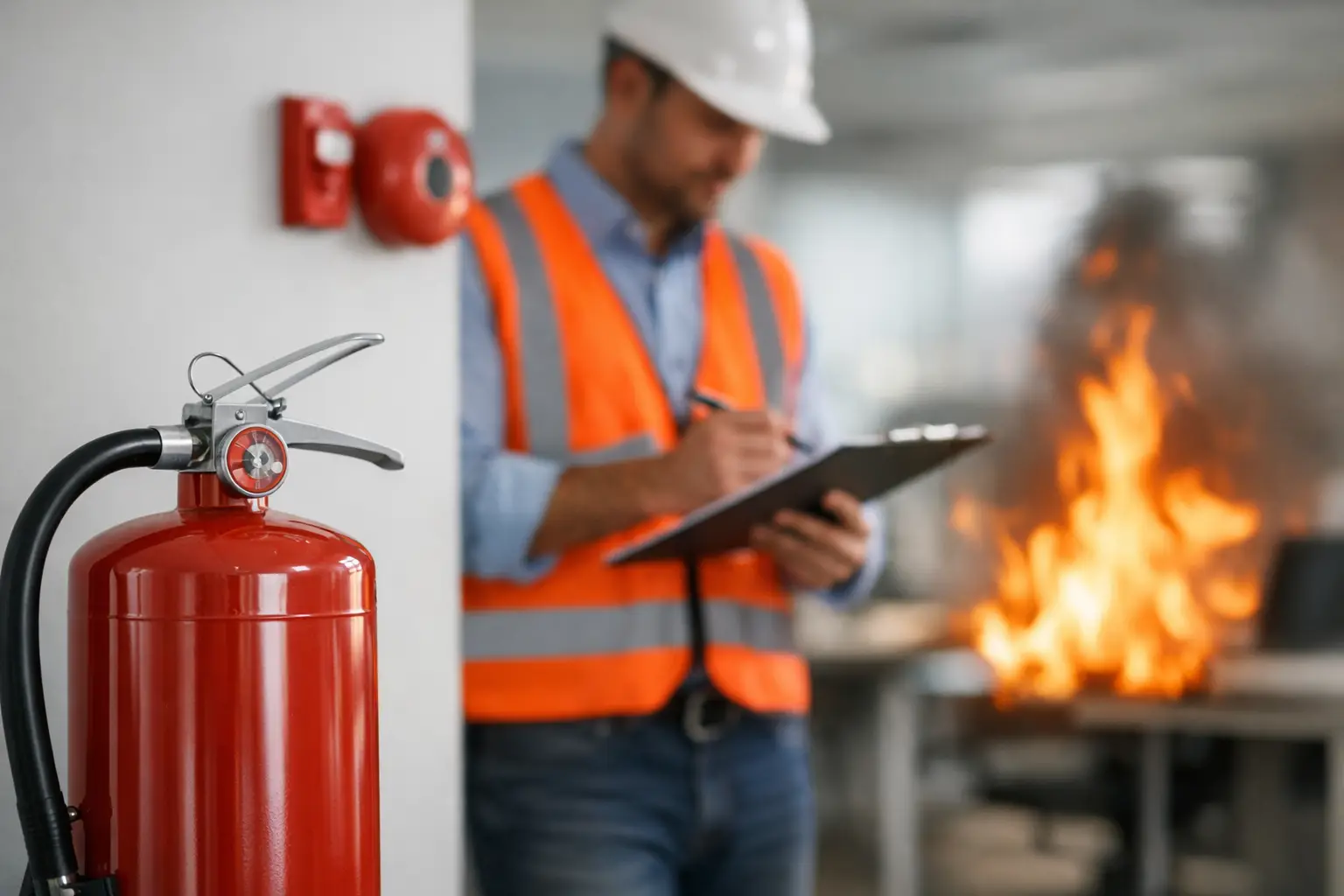
A fire risk assessment review is often treated as a paperwork exercise right up until something changes – a new layout, a different use of a room, extra stock, altered staffing, or a near miss that exposes a weakness. That is where problems start. If the assessment no longer reflects what is actually happening on site, it cannot guide safe decisions, support compliance, or stand up to scrutiny after an incident.
For duty holders, the real question is not whether a review is required in principle. It is whether the current assessment still matches the building, the people in it, and the way work is being carried out. If the answer is no, even in part, review becomes a practical necessity rather than an administrative nicety.
What a fire risk assessment review actually involves
A review is not always a full assessment from scratch. In many premises, it is a structured check of the existing fire risk assessment to confirm whether the findings remain valid, whether control measures are still suitable, and whether any new hazards or vulnerabilities have appeared.
That distinction matters. Some sites only need limited updates because very little has changed. Others need substantial revision because day-to-day operations have moved on while the paperwork has stayed still. A small office with stable occupancy is different from a rental property with frequent tenant turnover, and both are different again from a workshop, retail unit, or mixed-use commercial building.
The purpose is straightforward – to keep the assessment live. Fire safety risks change with use, occupancy, storage, equipment, maintenance standards, and management arrangements. A review checks whether precautions still reflect those realities.
Why a fire risk assessment review should never be left too long
The longer an assessment goes unreviewed, the more likely it is to drift out of date in small but significant ways. Escape routes may remain physically present but become less effective because of storage creep. Fire doors may still be in place but fail to close properly. Extinguishers may still hang on the wall but no longer suit the hazard profile in the area.
This is where compliance and practicality meet. Fire safety law is concerned with suitable and sufficient assessment, but a business interruption event does not care whether the paperwork looked acceptable at a glance. If an incident occurs and protective measures do not reflect current conditions, the cost can be felt in lost trading time, insurer queries, enforcement action, reputational damage, and avoidable risk to life.
A review also protects against false reassurance. Many businesses assume that because an assessment was completed at some point in the past, the duty has been met. In reality, the quality of the original document matters, but so does its ongoing relevance.
When a review is likely to be needed
There is no single trigger that fits every premises, but certain changes should prompt immediate attention. Alterations to the building are an obvious example. If walls are moved, rooms are repurposed, or occupancy patterns change, escape strategy and fire precautions may need updating.
Operational changes can be just as important. A stockroom that now holds more combustible materials, a kitchen area with new equipment, or a workshop with added electrical load all affect fire risk. Staffing changes matter too, especially where vulnerable persons, lone workers, young persons, or people unfamiliar with the premises are involved.
There are also softer triggers that are easy to miss. Repeated housekeeping issues, blocked routes, poor alarm response, missing maintenance records, or uncertainty over who is responsible for checks can all indicate that the assessment needs review because management controls are slipping.
In rental accommodation and commercial property, changes in occupancy can quickly alter the risk picture. What worked well for one tenancy may not remain suitable for the next.
Fire risk assessment review and legal responsibility
For responsible persons and duty holders, review is part of maintaining a suitable and sufficient fire risk assessment, not an optional extra added for good practice. The legal responsibility sits with the person who has control of the premises to the extent of that control. In practice, that may be a business owner, landlord, managing agent, facilities manager, or employer.
What matters is being able to show that fire precautions are based on current conditions and that findings are acted upon. A review that identifies issues but is never followed by remedial action will not offer much protection if questioned by enforcing authorities or insurers.
This is one of the main trade-offs businesses face. Some put off review because they want to avoid disruption or cost. The difficulty is that delayed action often creates larger costs later, especially where defects affect compartmentation, alarm coverage, emergency lighting, extinguisher provision, or staff preparedness.
What gets checked during a review
A proper review looks at more than the last document date. It considers whether the hazards remain accurately identified, whether people at risk are the same, whether current control measures are working, and whether previous recommendations were completed.
It should also consider the basics that often cause failure in real incidents – means of escape, fire doors, alarm arrangements, emergency lighting, signage, housekeeping, staff training, and the provision and maintenance of firefighting equipment. If extinguishers have not been serviced, are obstructed, or are poorly matched to the risks present, that is not a minor gap. It is a weakness that could directly affect first-aid firefighting in the opening stage of an incident.
For many businesses, this is where specialist support adds value. A reviewer with practical fire safety experience can spot when the written assessment says one thing but the site reality says another. That gap is where compliance problems usually sit.
Common signs your current assessment may be out of date
Sometimes the issue is obvious, such as building works or a new tenant fit-out. More often, the warning signs are routine and therefore overlooked. Staff may not know the evacuation procedure. Final exits may be difficult to open. A storeroom may now contain lithium battery charging equipment not considered in the original assessment. Maintenance logs may be incomplete, or recommendations from the previous assessment may have stalled.
Another common issue is generic documentation. If the wording could describe almost any building, it may not properly reflect yours. That creates a risk because the assessment should support decisions specific to your premises, your layout, your people, and your working practices.
Where businesses operate from older buildings, converted premises, or mixed-use properties, review becomes even more important. These environments often develop piecemeal over time, which makes assumptions risky.
How often should a fire risk assessment review happen?
It depends on the premises and the pace of change. Low-complexity sites with stable conditions may only need periodic review alongside any trigger events. Higher-risk or fast-changing environments may need more frequent attention. What matters is not choosing an arbitrary interval and forgetting about it, but having a defensible approach based on risk, change, and evidence.
Annual review is a sensible benchmark for many commercial premises because it helps keep documentation current and prompts action before small issues become embedded. That said, annual review should not be mistaken for the only time the assessment can be revisited. Significant change should always come first.
For businesses in Glasgow and the wider Scottish market, where commercial premises can range from compact offices to older industrial and tenement-style properties, a fixed one-size-fits-all answer is rarely good enough.
Why equipment and maintenance records matter in the review process
A fire risk assessment does not sit separately from extinguisher servicing, inspections, alarm testing, or emergency lighting checks. These are connected parts of the same compliance picture. A review should consider whether the control measures identified on paper are being maintained in practice.
This is particularly important for extinguishers. Their presence alone does not prove readiness. They must be correctly selected, properly sited, maintained to the relevant standard, and accessible when needed. If site use has changed, extinguisher type or location may no longer be appropriate.
That is one reason businesses benefit from dealing with specialists who understand both assessment and equipment provision. EXSERVICE, for example, works with duty holders who need their fire precautions to be more than nominally compliant. The aim is to keep businesses protected, documented, and ready to respond.
Treat review as part of risk control, not admin
The best time to review an assessment is before it is tested by a fire, a complaint, or an inspection. When a fire risk assessment review is done properly, it gives you a current picture of risk, a realistic action plan, and confidence that your precautions still make sense for the way the premises are actually used.
That is what responsible fire safety management looks like – not just having a document, but keeping it relevant enough to protect people, support compliance, and reduce avoidable disruption when circumstances change.
Leave a Reply