

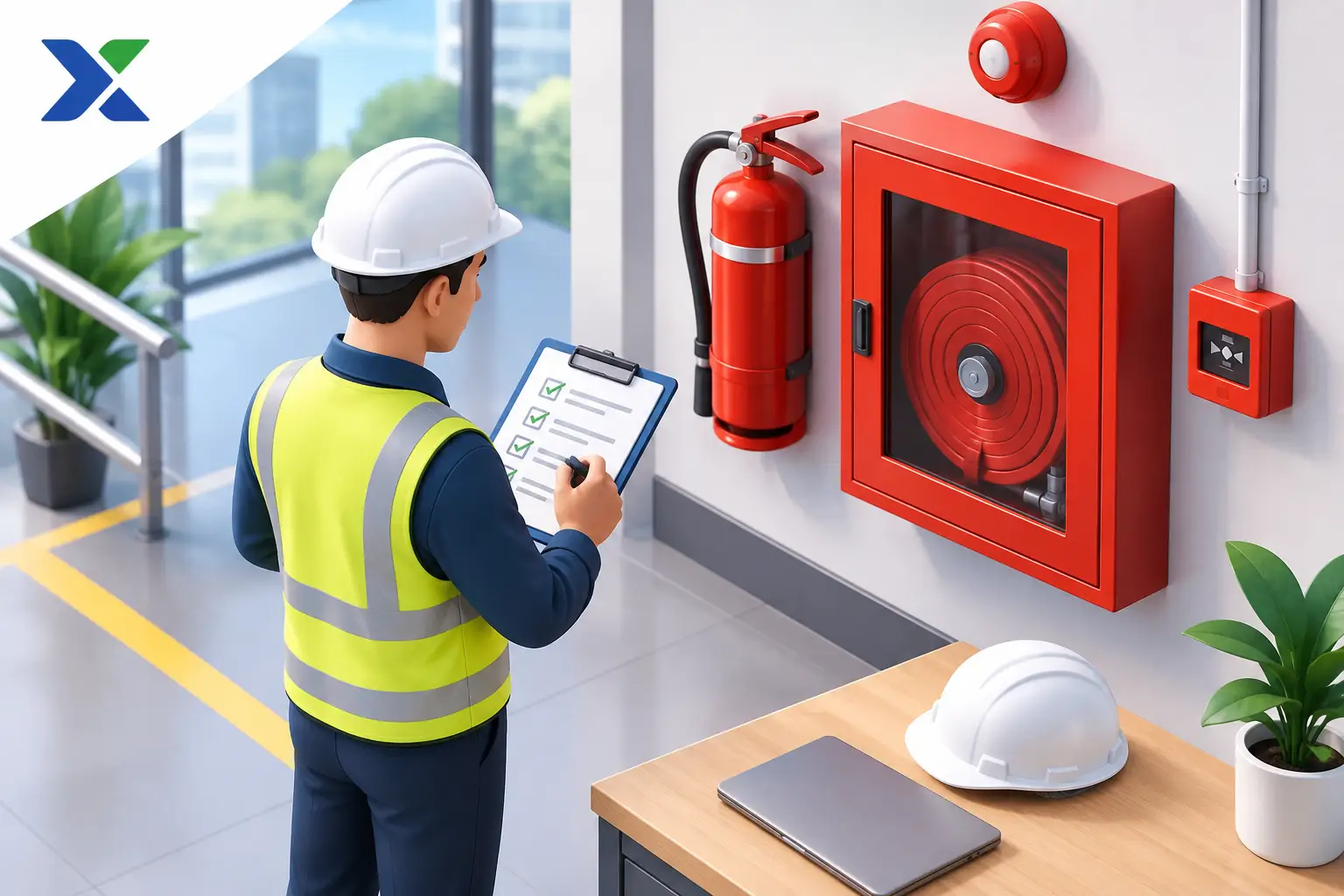
A fire extinguisher that cannot be found, an alarm fault left unresolved or a blocked escape route can turn a small incident into a serious loss. To manage fire safety responsibilities properly, duty holders need more than equipment on the wall. They need clear ownership, suitable controls, reliable records and a routine that keeps protection in place when the premises are busy.
For business owners, landlords, facilities managers and supervisors, fire safety is not a one-off task completed at the start of a tenancy or after an inspection. It is an operational responsibility. The condition of the building, the people using it and the work carried out there can all change over time.
Know who is responsible for fire safety
In Scottish non-domestic premises, fire safety duties commonly fall on the employer, owner, occupier or anyone with control over all or part of the premises. In practice, several people may have responsibilities. A landlord may control common areas, while a tenant controls its own shop, office or workshop. A managing agent may arrange maintenance, but that does not automatically remove the duty holder’s responsibility to make sure it is done.
The first step is to identify who has authority to make decisions and spend money on fire safety. That person must be able to act when a risk is found, whether that means repairing a fire door, improving escape-route lighting or replacing an extinguisher that has reached the end of its serviceable life.
Responsibilities should also be allocated within the workplace. Staff need to know who reports hazards, who checks escape routes, who meets contractors and who keeps fire safety documents up to date. Delegating tasks is sensible. Delegating accountability without oversight is not.
Start with a suitable fire risk assessment
A fire risk assessment is the foundation for managing fire safety responsibilities. It considers likely sources of ignition, combustible materials, people at risk and the measures needed to prevent fire and support safe escape. It should reflect the actual premises, not a generic checklist copied from another site.
For example, a quiet professional office may have very different risks from a workshop using flammable substances, a retail unit with public access or a short-term let where guests are unfamiliar with the layout. People who may need assistance, such as visitors, lone workers or those with limited mobility, also require proper consideration.
The assessment should lead to practical action. It may identify the need for suitable extinguishers, clearer signage, improved housekeeping, staff training, emergency lighting checks or a revised evacuation procedure. Record significant findings, the people at risk and the action taken. Where a measure cannot be completed immediately, record who owns it and the date it will be reviewed.
A formal review is sensible at regular intervals, often annually for many businesses, but it should also happen when circumstances change. A new tenant, refurbishment, altered layout, different stock, new machinery or a rise in staff numbers can all affect the level of risk.
Manage fire safety responsibilities through routine checks
Good fire safety management is built into normal site management. If checks rely on one person remembering them during a quiet week, gaps will appear when that person is absent or the business is under pressure.
Set a simple schedule that suits the size and risk profile of the premises. A small office may need a straightforward monthly management check, while a larger or higher-risk site may require more frequent inspections and clearer escalation arrangements. The key is that checks are meaningful and recorded, rather than completed as a paper exercise.
A routine inspection should confirm that:
- escape routes, stairways and final exits are clear and usable;
- fire doors close properly and are not wedged open or damaged;
- alarms, emergency lighting and safety signs have no known faults or obstructions; and
- fire extinguishers remain visible, accessible and free from obvious damage.
If a fault is found, deal with the immediate risk first. A blocked exit should be cleared at once. A missing extinguisher should be replaced or the area protected with a suitable alternative. Then record the issue, the corrective action and any follow-up needed. This creates a clear trail showing that the premises are actively managed.
Give staff practical instructions
Employees do not need to become fire safety specialists, but they do need to know how to raise the alarm, leave by a safe route and report hazards. New starters, agency staff and contractors should receive information appropriate to the site. Refresher training matters too, especially after changes to the layout, evacuation arrangements or the nature of the work.
Only staff who have been properly instructed should attempt to use a fire extinguisher, and only where it is safe to do so. The priority is always raising the alarm, calling the emergency services and evacuating people from danger. Extinguishers can control a very small fire in its early stage. They are not a reason to delay escape.
Keep firefighting equipment ready to use
The right extinguisher in the wrong location, or an extinguisher that has not been maintained, may offer false reassurance. Equipment should be selected according to the risks identified in the fire risk assessment, positioned where it can be reached without moving towards danger and clearly identified.
Workplaces commonly need protection for ordinary combustible materials, electrical risks and, where relevant, flammable liquids or cooking oils. There is no universal extinguisher package that suits every building. The type of business, floor area, travel distances and specific hazards all affect what is appropriate.
Fire extinguishers also require competent servicing and maintenance in line with the relevant British Standard, including BS 5306. Annual servicing is a key part of this, alongside the correct level of extended service or replacement at the appropriate interval for the extinguisher type. A damaged, discharged, corroded or obsolete unit must not be left in place simply because it is still mounted on the wall.
Keep service labels and records available. They provide evidence that equipment has been inspected and help identify when future work is due. For businesses in Glasgow and across the central belt, EXSERVICE can support the supply, siting, commissioning and ongoing maintenance of extinguishers so that equipment remains compliant and ready for use.
Protect records, insurance and business continuity
Records are not bureaucracy for its own sake. They show what was checked, what was found and how the business responded. Should there be a fire, an enforcement visit or an insurance query, clear documentation can demonstrate that fire safety was taken seriously.
Maintain an accessible file, whether paper or digital, containing the fire risk assessment, action plan, extinguisher service certificates, alarm and emergency lighting test records, staff training details and evacuation drill notes. Keep it current. An old assessment that ignores a major refurbishment can be more problematic than no record at all because it suggests known changes were not reviewed.
Insurers may have their own conditions around maintenance, housekeeping and protection systems. Check the policy wording rather than assuming that a basic annual service alone meets every requirement. Compliance, insurance protection and sensible risk control often overlap, but they are not always identical.
Review after change, not just on a calendar date
The most common weaknesses develop after a change that seemed minor at the time. Storage gradually moves into corridors. A fire door is held open for convenience. A new partition alters the escape route. A former office becomes a stock room, or a short-term let changes hands and no one confirms what safety information guests receive.
Make fire safety part of the change process. Before work starts, ask whether the proposal affects ignition sources, combustible materials, warning systems, escape routes or the people who may be present. After the change, update the assessment, plans and staff instructions where necessary.
A well-managed premises does not depend on luck or a last-minute scramble before an inspection. Give fire safety named owners, regular attention and competent support. That approach protects the people in your building and gives your business a far better chance of recovering if the unexpected happens.
Leave a Reply