

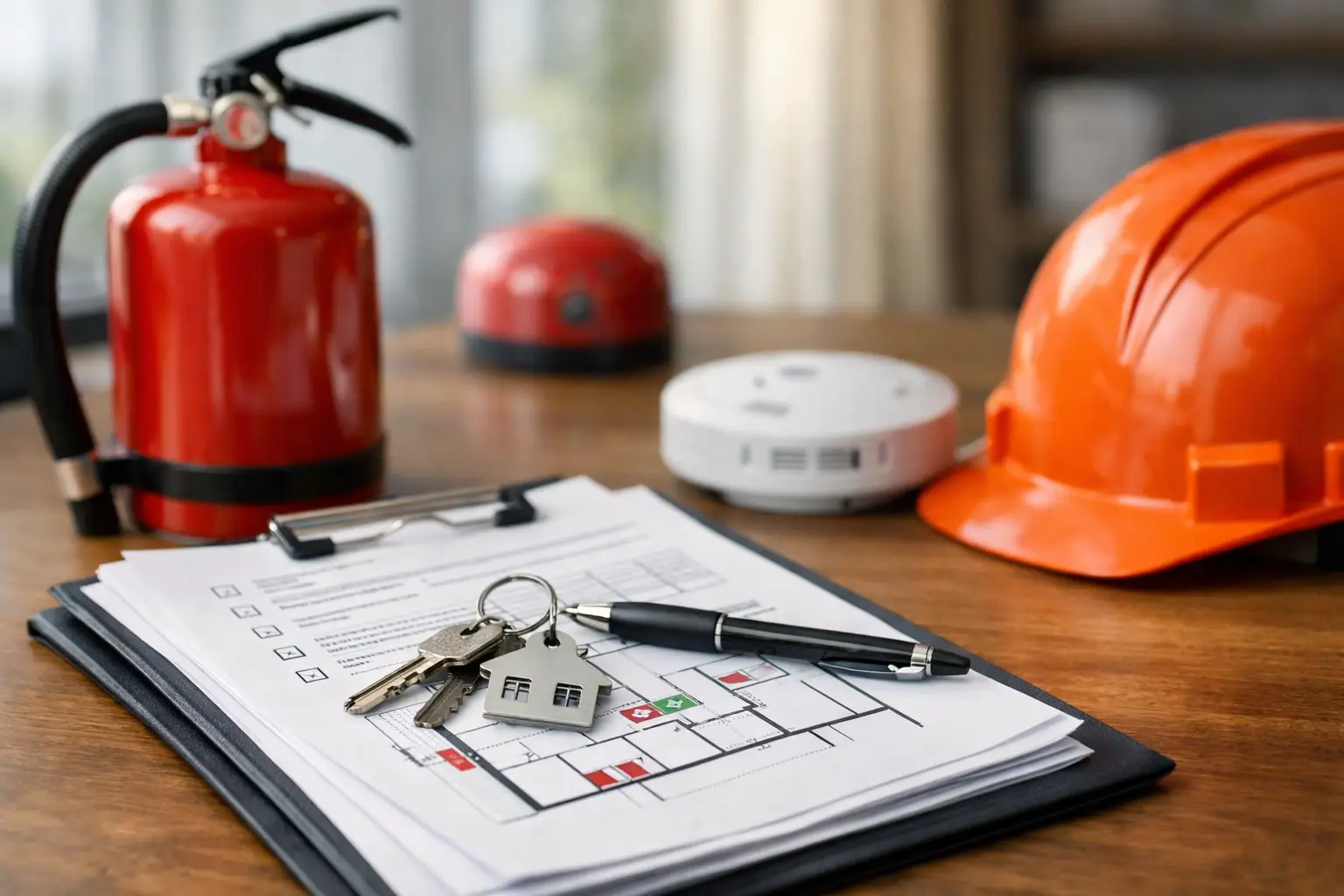
When a tenant, insurer or enforcement officer asks for proof of fire safety compliance, good intentions are not enough. Essential landlord fire safety documents are what show you have assessed the risk, acted on defects and kept life safety measures in working order.
For landlords, especially those managing HMOs, mixed-use premises or larger residential blocks, paperwork is not a side issue. It is part of the fire safety system itself. If records are missing, out of date or inconsistent, it becomes much harder to demonstrate that alarms were tested, extinguishers were maintained, escape routes were considered or electrical risks were managed properly. That can create problems not just with enforcement, but with tenant safety and insurance scrutiny after an incident.
Why essential landlord fire safety documents matter
Fire safety duties do not begin and end with fitting alarms or arranging the occasional inspection. Landlords and responsible persons need a clear record of what has been checked, when it was checked, what problems were found and what was done next. In practice, documents help you manage risk over time rather than treat compliance as a one-off task.
This matters because residential properties do not all carry the same level of risk. A single buy-to-let house will usually need a different level of control and record keeping than an HMO with shared escape routes, fire doors and higher occupant turnover. The more complex the premises, the more important documented evidence becomes.
There is also a practical point. If there is ever a fire, near miss or complaint, records help establish whether reasonable steps were taken. Without them, even landlords who believe they have acted responsibly can struggle to prove it.
The core essential landlord fire safety documents
The exact set of documents depends on the type of property, but some records are consistently important across rental accommodation.
Fire risk assessment
A suitable and sufficient fire risk assessment is often the central document. It identifies hazards, people at risk, existing controls and any action needed to reduce risk. In common areas of flats and in HMOs, this is particularly important.
A fire risk assessment should not be treated as a file to obtain once and forget. It needs review when the building layout changes, when tenant use changes, after a fire incident, or when previous findings are no longer accurate. An old assessment that does not reflect current conditions can be almost as problematic as having none at all.
Fire alarm and detection records
Where alarms or detection systems are installed, testing and servicing records matter. These documents show whether the system has been checked routinely, whether faults were identified and whether repairs were completed.
The level of system will vary by property. A straightforward domestic setup in a single-let property is different from a more extensive arrangement in an HMO or building with shared areas. What matters is that the system is suitable for the premises and that you can show it has been maintained.
Emergency lighting test records
If the property includes common escape routes that rely on emergency lighting, test records should be kept. These records show that lighting will operate if the normal power supply fails during an evacuation.
This is one of those areas where landlords sometimes assume the installation itself is enough. It is not. If emergency lighting is required, it should be inspected and tested at appropriate intervals, with the outcome recorded.
Fire door inspection and maintenance records
Fire doors are critical in slowing smoke and fire spread, especially in flats, HMOs and shared residential buildings. Inspection records should show that doors, closers, seals, frames and self-closing mechanisms have been checked and that defects were put right.
A fire door with a damaged seal, a broken closer or excessive gaps may look minor, but in an emergency it can fail to perform its life safety role. Keeping records of inspections and remedial work helps demonstrate that these doors were not simply installed and ignored.
Fire extinguisher service records
Not every rental property requires extinguishers in the same way, and in some domestic settings they may not be the primary control measure. But where extinguishers are provided in common areas, HMOs or commercial elements of mixed-use premises, servicing documentation is essential.
These records should show the type of extinguisher, its location, service date, condition and any replacement or maintenance carried out. For landlords with commercial premises or shared residential areas, documented extinguisher maintenance supports compliance, insurer expectations and emergency readiness.
Electrical safety records
Electrical faults remain a significant fire risk. Landlords should retain Electrical Installation Condition Reports, portable appliance testing records where relevant, and evidence of remedial works completed following inspection.
This is an area where document quality matters. An inspection certificate that identifies urgent remedial work is only half the story. You also need proof that the work was completed. Otherwise, the record shows awareness of a risk without evidence of action.
Gas safety record
While gas safety is often considered separately from fire safety, it still forms part of the broader picture of protecting tenants from ignition and combustion-related risks. Current gas safety records should be retained where gas appliances are present.
Maintenance and repair logs
General maintenance records can also become fire safety documents if they relate to escape routes, flat entrance doors, compartmentation defects, alarm faults or electrical hazards. A good repair log helps connect identified issues to completed actions.
That matters because enforcement concerns often arise not from the absence of an assessment, but from failure to act on findings. Records that show a defect was reported, prioritised and resolved are valuable.
Essential landlord fire safety documents for different property types
The phrase essential landlord fire safety documents sounds straightforward, but what is essential depends on the premises.
For a single-let house or flat, the key documents will often centre on smoke alarms, carbon monoxide alarms where required, electrical safety and gas safety. In these properties, the record set may be smaller, but it still needs to be current and credible.
For HMOs, expectations are usually higher. There may be a formal fire risk assessment, a more advanced fire alarm system, emergency lighting, firefighting equipment in common areas and stricter standards around fire doors and escape routes. In those settings, documentation should be more detailed and reviewed more regularly.
Mixed-use buildings add another layer. If a property includes commercial premises beneath or beside residential accommodation, the fire strategy and supporting records often become more complex. Responsibilities can overlap, and weak coordination between residential and commercial areas can create serious gaps.
What landlords often get wrong
The most common mistake is assuming certificates alone equal compliance. They do not. A folder full of documents is only useful if the contents are current, relevant to the property and backed by action.
Another problem is inconsistency. A fire risk assessment may identify defective emergency lighting, but there is no evidence of repair. Extinguishers may have been supplied, but there is no servicing record. Alarm tests may have been carried out informally, but not written down. These gaps matter because they suggest the system is not being managed properly.
Landlords also underestimate how quickly records become outdated. A change of tenancy, refurbishment, conversion of a room, or damage to a fire door can all affect whether existing documents still reflect reality.
How to keep your records useful, not just compliant
The best approach is to treat fire safety documents as a live management file. Keep them organised by property, make sure dates are visible, and review them before they expire rather than after. If a contractor identifies defects, keep the report and the follow-up record together so there is a clear trail from issue to resolution.
It is also worth checking whether the property has developed beyond the level of documentation currently in place. A landlord who starts with one straightforward let and later moves into HMOs or larger managed buildings will usually need a more structured compliance process.
For some landlords, especially those responsible for shared residential accommodation or mixed-use premises, specialist support helps remove uncertainty. A competent fire risk assessment and properly documented maintenance regime can make the difference between assumptions and evidence. That is where a specialist provider such as EXSERVICE can add value by keeping assessments, equipment servicing and compliance records aligned with the real risks on site.
When documents point to a bigger fire safety problem
Sometimes the paperwork itself reveals that the underlying fire precautions are weak. Repeated alarm faults, overdue extinguisher servicing, missing fire door checks or unresolved electrical recommendations are not just administrative issues. They are signs that the building may not be adequately protected.
That is why landlords should not focus only on having documents available for inspection. The better question is whether the records show a pattern of responsible management. Good documents support life safety because they help ensure checks happen, faults are noticed and action is taken promptly.
If you are reviewing your property files, start with one principle: every critical fire safety measure should have evidence behind it. If a system is installed, there should be a record it works. If a risk is identified, there should be a record it was addressed. That standard protects tenants, strengthens your position with insurers and helps keep your property ready when it matters most.
A well-kept fire safety file does more than satisfy a requirement. It shows that the building is being managed with the level of care people living there have every right to expect.
Leave a Reply