

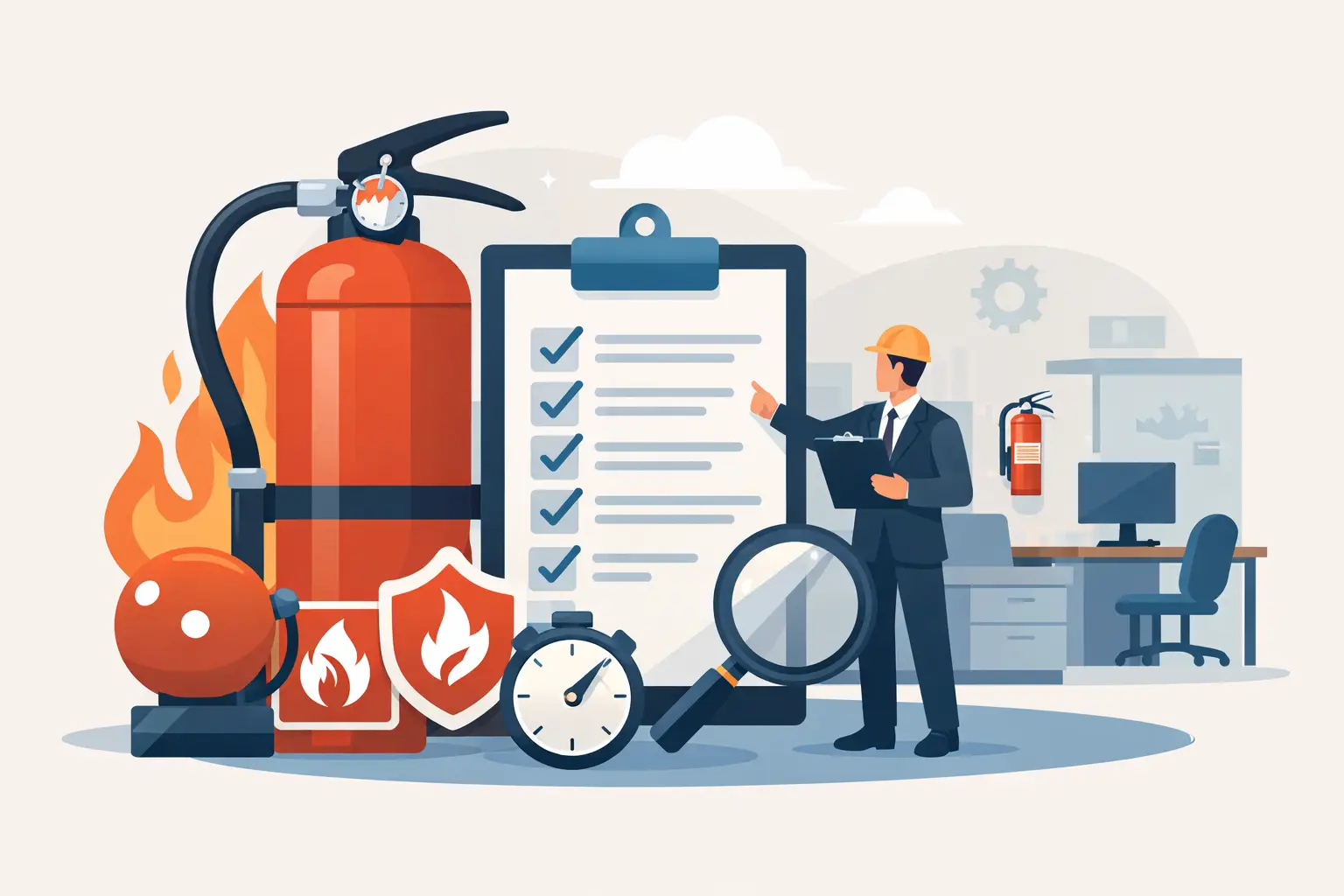
A fire extinguisher on the wall is not proof of compliance. For many workplaces, the real issue is whether the right extinguisher is in the right place, has been maintained properly, and will work when somebody reaches for it under pressure. That is where a workplace fire extinguisher compliance guide becomes useful – not as paperwork for its own sake, but as a practical way to protect people, premises and business continuity.
For duty holders in Glasgow and across Scotland, extinguisher compliance sits at the point where legal responsibility, risk management and day-to-day operations meet. If equipment is missing, unsuitable, obstructed or overdue for service, the consequences can go well beyond a failed inspection. A small fire can escalate quickly, insurer scrutiny can follow, and avoidable disruption can become expensive.
What compliance actually means in practice
In simple terms, compliance means your fire extinguishers are suitable for the risks present, positioned correctly, maintained to the relevant standard, and supported by proper records. It also means staff can identify the equipment available and use it only where safe to do so.
That sounds straightforward, but the details matter. A workplace may have extinguishers in place for years and still fall short because the fire risks have changed, units have reached end of life, or service intervals have been missed. Refurbished layouts, new machinery, cooking equipment, lithium battery charging points and storage changes can all affect what is required.
The benchmark often referred to for portable extinguisher provision and maintenance is BS 5306. For employers, landlords and other responsible persons, that standard helps translate broad fire safety duties into something measurable. It is not enough to assume that once extinguishers are installed, the job is done.
Workplace fire extinguisher compliance guide for duty holders
The first step is understanding that extinguisher provision should follow your fire risk assessment, not guesswork. The type and quantity of extinguishers needed depends on the building layout, occupancy, escape routes and the classes of fire that could arise. An office, a warehouse, a workshop and a kitchen area will not all require the same arrangement.
Water extinguishers are commonly used for Class A risks such as paper, wood and textiles. CO2 extinguishers are typically provided near electrical equipment. Foam may suit mixed risks in some commercial settings. Wet chemical is generally required where cooking oils and fats are present. Powder can cover a range of fire classes, but in enclosed workplaces it may be less suitable because it affects visibility and can create breathing concerns. This is a good example of where compliance is not just about broad coverage – it is about choosing equipment that makes sense for the environment.
Siting is just as important as selection. Extinguishers should be positioned where people can reach them quickly, usually on escape routes, near exits, and close to identified fire hazards without placing users in unnecessary danger. If an extinguisher is hidden behind furniture, blocked by stock or mounted where signage is poor, it may technically be on site but operationally useless.
Servicing, inspections and maintenance records
One of the most common compliance gaps is confusing visual checks with formal servicing. In-house staff can and should carry out routine visual inspections. That means checking that extinguishers are in place, unobstructed, apparently undamaged, and still within service date. It does not replace maintenance by a competent engineer.
Annual servicing is a core requirement for most workplaces. During service, the engineer checks pressure, condition, tamper seals, labelling, hose integrity, corrosion, accessibility and overall serviceability. If a unit is damaged, discharged, incorrectly sited or at end of life, it should be replaced or corrected without delay.
Maintenance records matter because they show that equipment has been managed properly. If there is a fire, or if an enforcing authority or insurer asks for evidence, documented servicing provides a clear compliance trail. Missing records can create avoidable doubt, even where extinguishers appear to be in acceptable condition.
This is why many businesses choose a specialist provider rather than trying to manage dates manually across multiple units and locations. A consistent servicing schedule reduces the risk of missed inspections and helps keep compliance from slipping into a reactive exercise.
Common mistakes that put businesses at risk
In many premises, the problems are not dramatic. They are small oversights that build up over time. An office fit-out changes the route to an extinguisher. A warehouse expands storage into a circulation area. A kitchen replaces appliances but not the fire protection beside them. A unit is discharged during a minor incident and never properly recommissioned.
Another common issue is relying on old assumptions. Businesses often inherit extinguisher layouts from previous tenants, previous contractors or previous building uses. What was suitable five years ago may not match the current risk profile. Compliance is not static.
There is also the question of over-provision. More extinguishers do not always mean better protection. Too many units, poorly matched to the risk, can confuse staff and complicate maintenance. The aim is appropriate cover, clearly identified and professionally maintained.
Staff awareness and safe use
A compliant workplace should not treat extinguishers as decorative equipment. Staff need a basic understanding of what extinguishers are for, what types are available, and when not to use them. Portable extinguishers are for tackling very small fires in the early stages, and only if the person is trained, the correct extinguisher is available, and there is a safe means of escape behind them.
That distinction matters. Encouraging untrained staff to fight a growing fire can create serious risk. Good fire safety management combines suitable equipment with clear emergency procedures, alarm arrangements and evacuation planning.
Simple awareness also helps prevent misuse. If staff know that CO2 is intended for electrical risks and that wet chemical is used for certain kitchen fires, they are less likely to make a dangerous decision in an emergency. Compliance, in that sense, is partly about readiness and partly about restraint.
What Scottish businesses should review now
A practical workplace fire extinguisher compliance guide should lead to action. For most duty holders, that starts with a clear review of what is currently installed and whether it still matches the premises. Check that each extinguisher type is appropriate, each location is visible and accessible, and each service date is current. Confirm that signage is present and records are available.
If your building has changed use, been refurbished, taken on new equipment or altered its internal layout, the extinguisher provision should be reviewed against those changes. The same applies if your fire risk assessment is out of date. Fire safety equipment should support that assessment, not sit separately from it.
Where there is uncertainty, specialist advice is usually the most efficient route. It avoids the cost of getting it wrong twice – first through unsuitable equipment, then through correction work later. For businesses managing compliance across offices, retail units, depots, communal areas or mixed-use premises, that clarity is especially valuable.
EXSERVICE works with workplaces that need extinguisher provision, servicing and maintenance handled properly, with compliance records in place and equipment kept ready for immediate use. That is often what business owners and facilities teams need most: not more complexity, but confidence that the basics are covered to the right standard.
Compliance is about readiness, not box-ticking
The strongest approach to extinguisher compliance is the simplest one. Treat extinguishers as working safety equipment, not as a one-off purchase. Review them when risks change, service them on time, keep records in order, and make sure staff understand their role.
If a fire starts, there is no useful distinction between equipment that looked compliant and equipment that truly was. The difference is decided much earlier – by the quality of the assessment, the standard of maintenance, and whether somebody took responsibility before the emergency happened.
Leave a Reply