

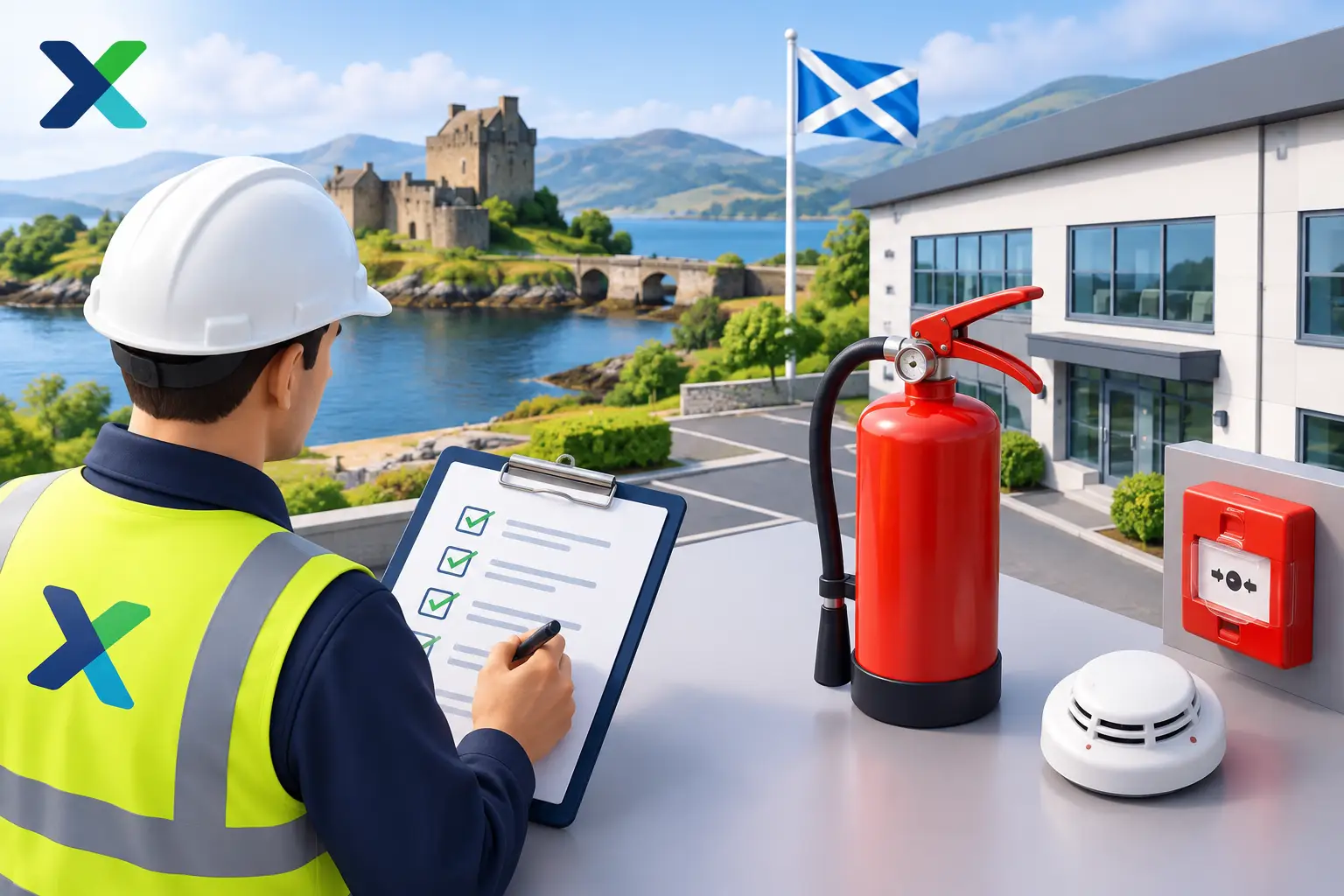
A fire assessment checklist should do more than confirm that extinguishers are on a wall and an alarm makes a sound. It should help the person responsible for a premises identify how a fire could start, who may be at risk, whether people can escape safely, and whether the controls in place will work under pressure.
For business owners, landlords and facilities managers, that process protects people first. It also protects trading, property, insurance arrangements and the ability to show that fire safety has been managed responsibly. In Scotland, the detail of your duties will depend on the type and use of the premises, but a clear, recorded assessment is the foundation of effective fire safety management.
What a fire assessment checklist is for
A checklist is a practical prompt for a fire risk assessment. It prevents familiar hazards from being overlooked and gives you a consistent way to review the premises when staffing, layout, equipment or occupancy changes.
It is not a replacement for competent judgement. A small office with a straightforward layout may be relatively simple to assess, while a workshop using flammable substances, a multi-occupancy building, or short-term accommodation with unfamiliar guests requires closer consideration. If the risks are complex, the building has a difficult means of escape, or there have been significant changes, specialist advice is appropriate.
The assessment should be specific to the premises rather than a generic form completed at a desk. Walk the site, speak to the people who use it, inspect the escape routes and test whether the documented arrangements reflect what would actually happen in an emergency.
Fire assessment checklist: the areas to inspect
1. Identify ignition sources and combustible materials
Start with the realistic causes of fire in your premises. In offices, this may include overloaded extension leads, damaged electrical equipment, kitchens, portable heaters and charging devices. In retail, workshops and service businesses, hot work, machinery, cooking, solvents, aerosols, waste and storage practices may add further risk.
Check that electrical items are in good condition, sockets are not overloaded, and equipment is switched off or isolated when not required. Portable heaters should be controlled carefully and kept clear of stock, paperwork, furniture and other combustible materials.
Consider how combustible materials are stored. Cardboard, packaging, waste, cleaning products and stock should not build up beside electrical intake cupboards, boilers, kitchen equipment or escape routes. External waste storage also matters. Bins positioned against a building can allow a deliberately lit fire to spread quickly into the premises.
2. Check the people who could be at risk
A sound assessment considers everyone who may be in the building, not only permanent employees. This can include contractors, visitors, customers, cleaners working outside normal hours, lone workers and people with limited mobility, hearing or sight.
Ask a practical question: if the alarm activates at the busiest or quietest point of the day, can every person recognise the warning and reach a place of safety? For short-term lets and rental accommodation, occupants may be unfamiliar with the layout and may be asleep when a fire starts. Clear information, maintained detection and usable escape routes become especially important.
Where an individual may need assistance to evacuate, put a suitable arrangement in place. This may involve a personal emergency evacuation plan, trained assistance, a refuge strategy or changes to how and where the person works. The right approach depends on the building and the individual, so it should not be assumed.
3. Inspect escape routes and fire doors
An escape route only works if it is available at the moment it is needed. Walk every route from occupied areas to the final exit. Check that corridors, stairs, doors and external exits are free from storage, locked barriers, trailing leads, deliveries and furniture.
Exit doors should be capable of being opened easily in the direction of escape where required, without searching for a key. Emergency lighting should provide enough illumination if normal lighting fails. Signs need to be visible, accurate and positioned where people must make a decision about which way to go.
Fire doors deserve particular attention. A fire door that is wedged open, damaged, poorly fitted or unable to close properly cannot perform its intended role. Check the door, frame, hinges, self-closing device, seals and glazing. Do not treat a closed fire door as an inconvenience – it can hold back fire and smoke long enough for occupants to escape.
4. Review detection, warning and firefighting equipment
Confirm that fire alarm and detection arrangements suit the premises and are tested, maintained and recorded. A manual call point hidden behind stock, a detector affected by dust, or an alarm that cannot be heard in a noisy workshop creates a false sense of security.
Fire extinguishers should be suitable for the likely fire risks, correctly sited, clearly identified and accessible. The correct type matters. Water-based extinguishers are not appropriate for live electrical equipment or cooking oil fires, and a poorly selected extinguisher can make an incident worse.
For workplaces, extinguisher provision and maintenance should be managed in line with the relevant requirements, including BS 5306. Check for the following:
- extinguishers are at visible, accessible points, normally near escape routes or fire points;
- units are not obstructed, corroded, damaged, discharged or past their service date;
- signs and identification make the equipment easy to locate and select;
- staff know that extinguishers are for a small, contained fire only, and never instead of raising the alarm and evacuating.
Equipment must be ready to use, but it is not a reason to expect staff to take unnecessary risks. Evacuation remains the priority where there is any doubt.
5. Test management arrangements, not just equipment
Fire safety fails most often in the gap between a written policy and day-to-day practice. Your checklist should therefore cover who does what, when and how it is recorded.
Identify the responsible person or duty holder, along with deputies for holidays, sickness and out-of-hours operation. Confirm that staff receive relevant fire safety instruction at induction and refresher training where needed. Fire wardens or marshals should understand their role, but should not be expected to search areas where conditions are unsafe.
Review your evacuation procedure. Is there a nominated assembly point? Is it clear who calls the fire and rescue service, who checks visitor records, and who reports missing people? Fire drills reveal weaknesses that paperwork does not. Record findings, act on them and communicate changes to staff.
Keep inspection, testing and servicing records together. These may include alarm tests, emergency lighting checks, extinguisher service documentation, drill records, staff training and actions arising from the assessment. Good records demonstrate control and make it easier to spot missed maintenance before it becomes a problem.
When to review your assessment
A fire risk assessment is a living document. Review it at planned intervals, but do not wait for the next annual date if something changes. A new tenant, a refurbishment, altered floor layout, new machinery, a change in storage, an increase in staff numbers or a fire-related near miss can all change the risk profile.
For example, an office that begins storing stock in its corridors has changed its escape arrangements. A café that installs new cooking equipment may need different extinguishing provision and staff instruction. A landlord converting a property for short-term guests must consider that occupants will not know the building as well as residents or employees do.
The review should state what has changed, the additional risk created, the control required, the person responsible and a realistic completion date. Actions without ownership or deadlines are easily forgotten.
Common checklist failures to avoid
The most common weakness is treating the exercise as a tick-box task. A completed form does not reduce risk if exits remain blocked, a fire door is held open, or servicing dates are missed.
Another failure is relying on a single control. An extinguisher cannot compensate for an inadequate escape route, and a fire alarm cannot compensate for staff who do not know what to do when it sounds. Effective fire safety uses layers: prevention, early warning, safe escape, appropriate equipment and competent management.
Finally, avoid copying another site’s assessment without checking your own conditions. Two similar shops can have different risks because of their layout, basement storage, opening hours, electrical equipment or the people using the premises.
Turn findings into practical action
Use the fire assessment checklist to prioritise issues according to the harm they could cause and how likely they are to occur. Deal promptly with immediate threats such as blocked exits, defective fire doors, unsafe electrical equipment or missing firefighting equipment. Then programme longer-term improvements, such as revised staff training or changes to building layout.
For businesses across Glasgow and the central belt, EXSERVICE can support this process through practical fire risk assessment and fire extinguisher servicing arrangements designed to keep equipment compliant, maintained and ready for use.
A well-managed premises is not one that simply has a fire safety file. It is one where the escape route is clear, the equipment is maintained, the records are current and the people on site know exactly what to do when seconds matter.
Leave a Reply