

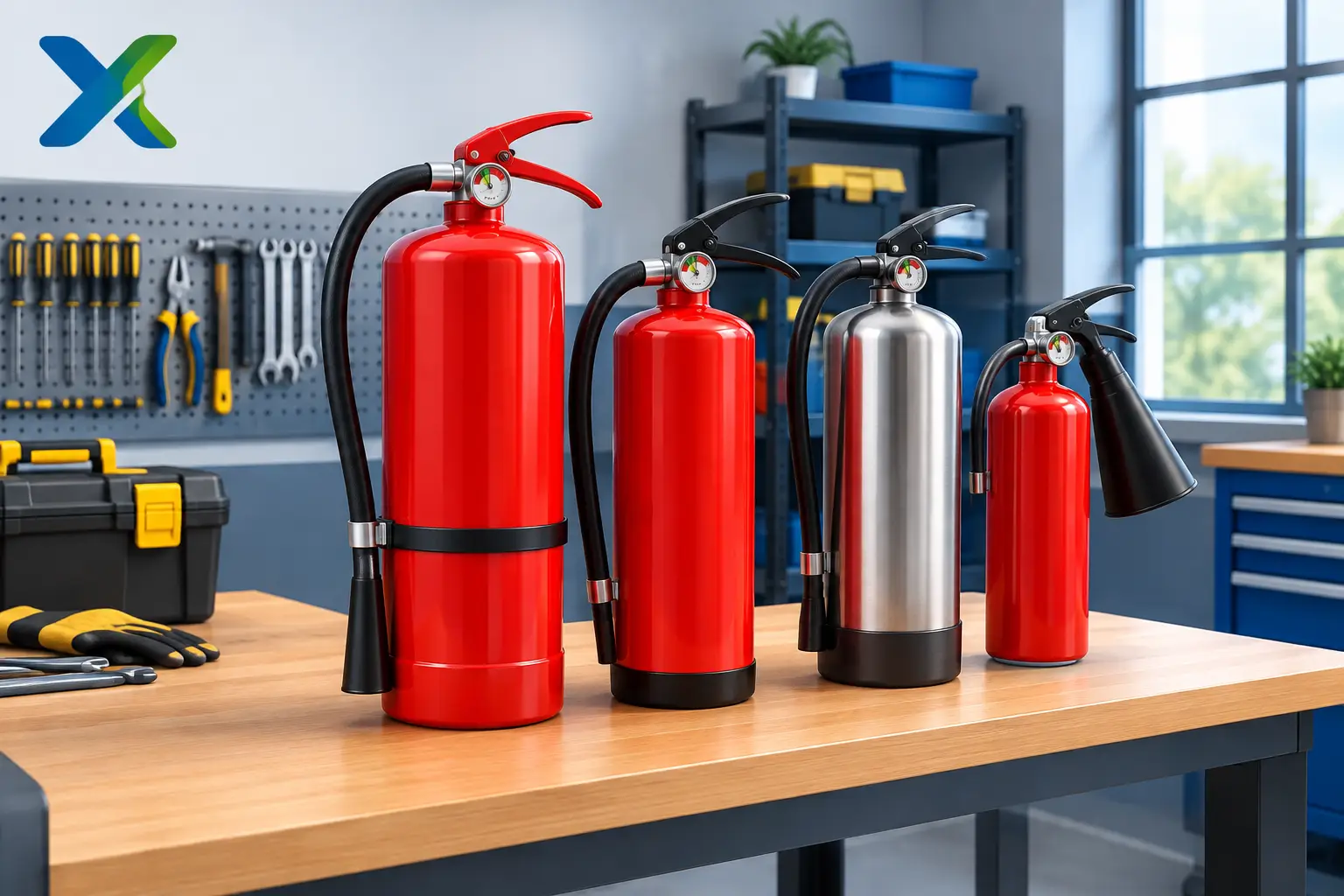
A workshop fire can develop quickly: a grinder throws sparks into dust, a charger overheats, or a tin of solvent is left too close to hot work. The best fire extinguishers for workshops are not simply the largest units or the ones with the widest claims on the label. They are the extinguishers that match the hazards in your specific workspace, are correctly sited, and will work when someone needs them.
For duty holders, this is a compliance and business-continuity issue as much as a safety decision. The wrong extinguisher can put a person at greater risk, spread a fire, create avoidable clean-up costs, or leave the premises without suitable protection when an insurer or enforcing authority asks for evidence.
Best fire extinguishers for workshops depend on the work
There is no one extinguisher that suits every workshop. A joinery workshop, motor repair garage, fabrication bay and electronics repair unit all present different fuel sources and ignition risks. Your fire risk assessment should identify those risks and determine the extinguisher types, fire ratings, quantities and positions required.
Most workshops need protection for ordinary combustible materials such as timber, cardboard, textiles and packaging. They may also need separate provision for flammable liquids, energised electrical equipment, gas cylinders, vehicle fuels, batteries or specialist metals. The starting point is to consider what could burn, what could ignite it, and whether staff could safely tackle a very small fire before leaving the building.
A suitable arrangement commonly includes water-based extinguishers for Class A fires and carbon dioxide extinguishers for electrical risks. Where flammable liquids are used or stored, foam or an appropriate specialist extinguisher may be required. However, suitability always depends on the risk assessment rather than a standard shopping list.
Water and foam for combustible materials
Water extinguishers are highly effective on Class A fires involving wood, paper, cloth and similar materials. They are often a sensible choice in joinery, maintenance and general fabrication workshops where combustible stock, benches and packaging are present. Water must not be used on live electrical equipment, flammable-liquid fires or cooking oils.
Foam extinguishers can provide Class A cover and are also suitable for certain flammable-liquid fires, known as Class B fires. They may be appropriate where paints, oils, solvents or fuels are handled in controlled quantities. The exact foam type matters, particularly where environmental policies, drainage arrangements or specific chemical products are involved.
Carbon dioxide for electrical equipment
Carbon dioxide, commonly called CO2, is often selected for electrical panels, machinery controls, servers, test equipment and other energised electrical risks. It leaves no residue, which can reduce damage to sensitive equipment and downtime after a minor incident.
CO2 has limitations. It is less effective on deep-seated Class A fires because it does not cool the material sufficiently, so reignition is possible. Its horn can also become extremely cold during use. In confined spaces, the discharge of CO2 needs careful consideration, and staff should understand that their first priority is to raise the alarm and escape, not to fight a fire.
Powder for outdoor and specialist risks
Dry powder extinguishers have broad fire-fighting capability and can be useful in external areas, yards and some plant locations. They may cover Class A, B and C fires, depending on the product, and can be suitable near LPG or other flammable gases.
Their drawbacks are significant indoors. Powder can reduce visibility, contaminate machinery, affect electronics and create breathing difficulties. For that reason, powder is rarely the best general choice inside an occupied workshop. It should be selected only where the risk assessment supports it and the operational consequences are understood.
Specialist extinguishers for metals and batteries
Some risks cannot be addressed by ordinary workshop extinguishers. Metalworking operations involving magnesium, lithium, sodium or aluminium powder may require a Class D powder designed for that specific metal. Using water or a general-purpose extinguisher on the wrong metal fire can make the situation worse.
Lithium-ion battery risks also require a considered response. Workshops increasingly charge cordless tools, e-bikes, handling equipment and battery packs on site. A battery fire can involve rapid thermal runaway, toxic smoke and reignition. A suitable extinguisher may help control surrounding materials, but it is not a substitute for safe charging locations, separation, monitoring, emergency planning and prompt evacuation. Seek competent advice where batteries are charged, repaired, stored or handled in volume.
Selection should follow the fire risk assessment
In Scotland, the duty to manage fire safety sits within the Fire (Scotland) Act 2005 and supporting regulations. A suitable fire risk assessment is the foundation for deciding what equipment is needed. It should consider the building layout, workshop processes, stored materials, ignition sources, people at risk and the means of escape.
BS 5306-8 provides guidance on the selection and positioning of portable fire extinguishers. In practice, this means extinguishers should be visible, accessible and located on escape routes or near exits where possible, rather than placed deep inside the highest-risk area. A person should be able to take an extinguisher while moving towards safety, not be forced to move further into danger to collect one.
Do not choose extinguishers by colour alone. In the UK, portable extinguishers are predominantly red, with a coloured band identifying the extinguishing medium. Read the label, fire rating and instructions, and make sure the equipment is appropriate for the risk it is intended to address.
Fire points also need clear signs, appropriate mounting and enough protection against damage. A unit hidden behind stock, blocked by a vehicle or left loose on the floor is unlikely to be useful in an emergency. Changes to the workshop layout, machinery or materials should trigger a review.
Fire extinguishers are only useful if they are maintained
Buying suitable equipment is only the first step. Portable extinguishers require commissioning when installed, regular visual checks and servicing by a competent person in accordance with BS 5306-3 and the manufacturer’s requirements. Service labels, asset records and certificates provide evidence that the equipment has been inspected and remains ready for use.
The responsible person should arrange routine checks to identify obvious issues between services. Look for missing units, damaged hoses or horns, broken anti-tamper seals, obstructed access, illegible instructions, corrosion and discharged pressure indicators. Staff do not need to dismantle equipment, but they should report anything that appears wrong immediately.
Annual servicing is normally required, with additional extended service or overhaul intervals applying to many extinguisher types. A competent fire extinguisher engineer can identify end-of-life units, unsuitable equipment and gaps created as the premises change. This is particularly valuable for workshops, where vibration, dust, moisture and accidental damage can affect equipment condition.
Training matters as much as equipment
An extinguisher is for controlling a small, early-stage fire only when it is safe to do so. No employee should be expected to fight a fire. They must understand how to raise the alarm, call the emergency services, evacuate and assemble safely.
Where staff are expected to use extinguishers, practical training should reflect the real risks in the workshop. Someone who works around woodworking machinery needs different awareness from a technician repairing electric tools or a mechanic using fuels and aerosols. Training should reinforce when not to intervene: if smoke is building, the fire is spreading, the escape route is compromised or there is any doubt, leave immediately.
A well-planned extinguisher provision protects more than property. It gives people a clear, safe response to an emerging incident and helps limit disruption when every minute matters. For workshops in Glasgow and across the central belt, EXSERVICE can assess the premises, supply and commission suitable units, and maintain the records needed to keep equipment ready to use.
The right question is not, “Which extinguisher is best?” It is, “What fire could start here, and what will keep people safe while protecting the route out?” Answer that properly, review it when work changes, and your workshop will be far better prepared.
Leave a Reply