

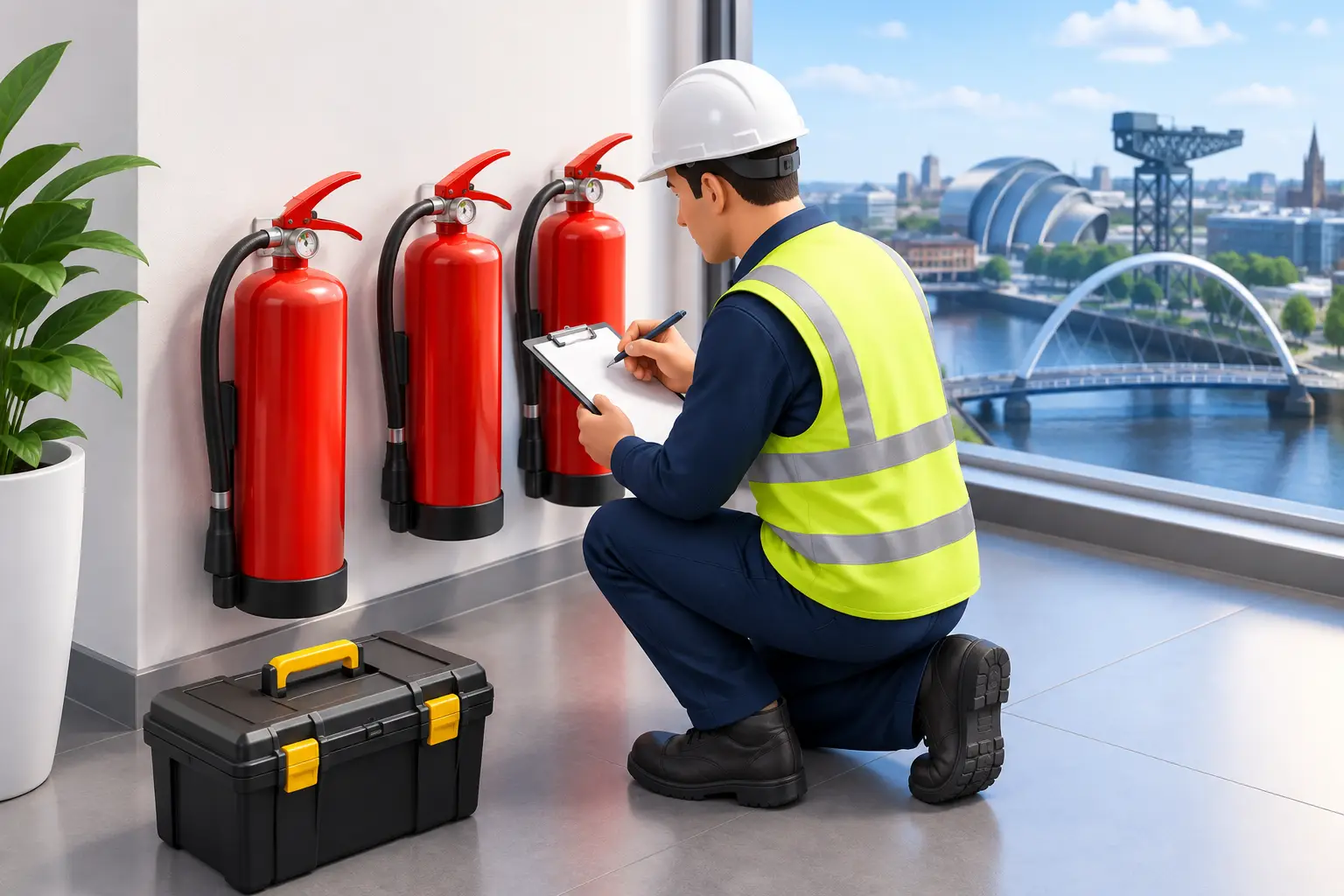
A fire extinguisher can be new, undamaged and mounted on the wall, yet still not be ready for use. Until it has been correctly selected, sited, checked and commissioned, it may not provide the protection your workplace needs. That is why choosing the best extinguisher commissioning Glasgow service is about more than buying equipment. It is about ensuring the right extinguishers are in the right places, supported by records that demonstrate responsible fire safety management.
For a business owner, landlord or facilities manager, commissioning is the point at which fire extinguishers become part of a working fire safety system. Done properly, it supports legal compliance, helps meet insurer expectations and gives staff a realistic first-response option should a small fire occur.
What extinguisher commissioning actually means
Commissioning is the formal process of putting a fire extinguisher into service following installation. A competent technician examines each unit, confirms that it is appropriate for the foreseeable fire risks, checks its condition and location, and records its details. The extinguisher is then marked with service information and entered into the site’s fire safety documentation.
This is different from simply delivering an extinguisher or fixing a bracket to a wall. A supplier can provide suitable equipment, but commissioning verifies that the finished installation is fit for that specific premises. It also differs from annual servicing. Commissioning takes place when equipment is first installed or placed into use; servicing is the planned inspection and maintenance that keeps it ready thereafter.
For workplaces, the relevant standard is BS 5306. The standard sets expectations around the selection, installation and maintenance of portable fire extinguishers. It should sit alongside a current fire risk assessment, because no two premises have exactly the same escape routes, hazards, occupancy levels or working practices.
Why the best extinguisher commissioning in Glasgow starts with risk
The word “best” should not mean the cheapest quote or the largest number of extinguishers. It means a service that makes evidence-based decisions for your building and can clearly explain those decisions.
A small office with computers, a commercial kitchen, a workshop and a shared rental property can all require different provision. Ordinary combustibles such as paper, packaging and timber present one type of risk. Flammable liquids, cooking oils, electrical equipment, batteries and gas cylinders introduce others. Selecting equipment without considering these hazards can leave a gap in protection or encourage unsafe use.
A competent provider should consider the findings of your fire risk assessment before commissioning. They should look at the size and layout of the premises, floor levels, travel distances, points of fire risk, escape routes and the people using the building. Extinguishers must be accessible without obstructing an exit or requiring someone to move towards a developing fire.
There is also a balance to strike. Too few extinguishers can leave occupants without an appropriate response option. Too many, or poorly selected units, can create confusion and add unnecessary cost. The correct arrangement depends on the premises and the risks present, not on a one-size-fits-all package.
Correct siting affects response time
In the first moments of a small fire, people need to recognise the equipment, reach it quickly and use it only where it is safe to do so. Commissioning checks whether extinguishers are visible, properly mounted, clearly identified and positioned near likely exit routes or risk areas as appropriate.
A unit hidden behind stock, placed above a safe handling height or installed inside a locked room is unlikely to help when it matters. Clear signage is equally valuable, particularly in larger premises or areas with visitors, contractors or staff who move between departments.
The technician should also confirm that each extinguisher is protected from avoidable damage, severe temperatures, corrosion and tampering. A warehouse, external plant area or busy loading space may need a different approach from a quiet office corridor.
What a competent commissioning visit should cover
A proper visit is practical, not a box-ticking exercise. The technician should assess the installed units individually and check that their type, capacity and fire rating suit the identified risks. They should inspect for transit damage, missing components, pressure issues and any signs that a unit has already been discharged or compromised.
They should then confirm the siting and mounting arrangements, fit or verify identification signs, and label the equipment with the commissioning details. Every extinguisher should be recorded in the service documentation so there is a clear asset history for future inspections, maintenance and replacement planning.
You should receive documentation that identifies the equipment, its location, the work completed and the next required service date. This paperwork matters. It provides evidence that the responsible person has taken reasonable steps to provide and maintain suitable firefighting equipment. It can also make fire safety checks, audits, landlord handovers and insurer queries far easier to manage.
Where deficiencies are found, a reliable provider should explain them plainly. That may mean recommending a different extinguisher, improving signage, relocating a unit, replacing an out-of-date product or addressing a wider issue identified in the fire risk assessment. Advice should be proportionate to the risk, not designed to sell equipment that the site does not need.
Questions to ask before appointing a provider
When comparing providers, ask whether commissioning will be carried out by a competent person with a sound understanding of BS 5306 and workplace fire risks. Confirm that the provider can supply, install, commission and maintain the equipment, rather than leaving you to coordinate separate contractors.
It is also sensible to ask what records will be provided, whether the proposed extinguisher types are linked to your fire risk assessment, and how future annual servicing will be scheduled. A low initial price can become poor value if documentation is incomplete, unsuitable equipment has to be replaced early, or no dependable aftercare is available.
For multi-site businesses, landlords with several properties or organisations with changing layouts, consistency is particularly useful. A single specialist provider can maintain clear records across sites and identify recurring issues before they become compliance problems.
Commissioning is not the end of your responsibility
Once extinguishers are commissioned, they need ongoing attention. The responsible person should arrange regular visual checks to make sure equipment remains present, accessible and undamaged. Formal maintenance must also be completed at the required intervals by a competent service provider.
Changes within the workplace can affect the original provision. A new kitchen, a battery charging point, additional storage, altered escape routes or a change in occupancy can all change the fire risk. If the premises changes, review the fire risk assessment and consider whether extinguisher locations or types need to change as well.
Staff also need to understand that extinguishers are for tackling only very small fires where it is safe to do so. The priority is always raising the alarm, evacuating safely and calling the emergency services. No item of equipment should encourage someone to take risks beyond their level of training or the limits of a safe escape route.
A practical standard for choosing well
The best extinguisher commissioning Glasgow businesses can choose is rooted in competence, suitable equipment and accountable records. It should give you confidence that your premises has been assessed properly, every unit is ready to use and future maintenance is straightforward to manage.
EXSERVICE approaches commissioning as part of a wider duty to protect people, premises and business continuity. By combining suitable provision with clear service records and ongoing maintenance support, a business can move from uncertainty to a controlled, defensible fire safety position.
If your extinguishers have recently been installed, your layout has changed or your documentation is incomplete, do not assume the equipment on the wall is enough. A competent commissioning check is a practical opportunity to confirm that it will be there, visible and capable when a safe first response is needed.
Leave a Reply