

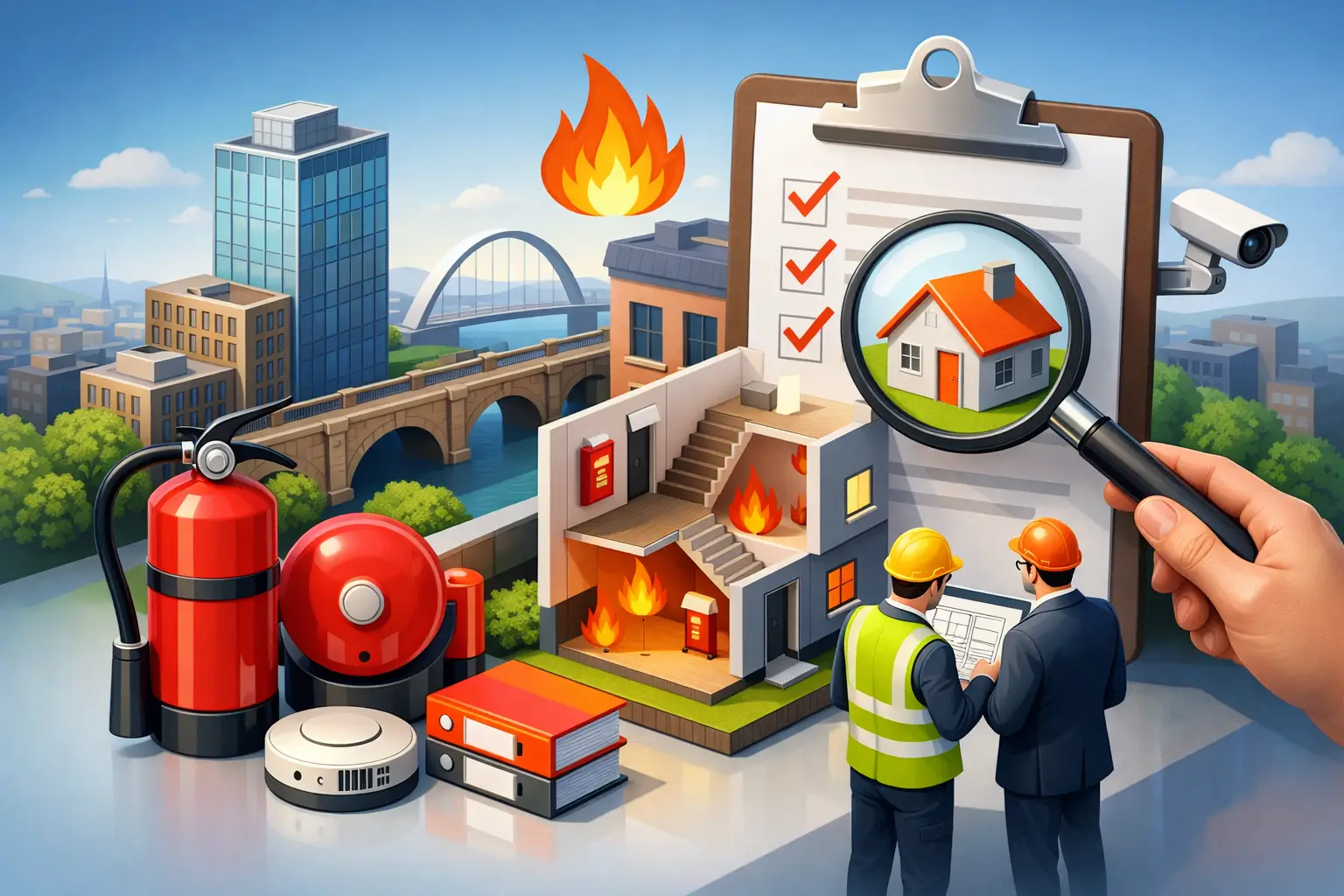
A fire door wedged open during a busy shift, an overloaded extension lead beneath a desk, or an extinguisher hidden behind stock can turn a manageable incident into a serious loss. A fire risk assessment Glasgow duty holders can depend on is not paperwork for a file. It is a practical review of how fire could start, who could be harmed, and what must work when people need to leave quickly.
For employers, landlords and facilities managers, the assessment provides the basis for sensible fire precautions. It helps protect employees, visitors, tenants and contractors while supporting legal compliance, insurer confidence and business continuity. The standard required is not perfection. It is a clear, suitable and sufficient approach to managing the genuine risks present at your premises.
Who is responsible for fire safety?
In commercial premises, responsibility usually rests with the person who controls the building or its day-to-day operation. This may be the employer, owner, managing agent, facilities manager or another appointed duty holder. More than one party can have responsibilities where control is shared, so responsibilities should be agreed rather than assumed.
Scottish fire safety law requires duty holders in relevant non-domestic premises to take reasonable measures to ensure the safety of people in the event of fire. Under the Fire (Scotland) Act 2005 and associated regulations, this includes carrying out and regularly reviewing a fire safety risk assessment, maintaining fire precautions and providing staff with appropriate information and training.
Rental accommodation needs equally careful attention, but the measures depend on the type of property and who occupies it. A flat within a shared block, a house in multiple occupation, and a commercial unit with staff and visitors all present different risks. Landlords should avoid relying on a generic checklist when the layout, occupancy, escape routes or shared areas demand a more considered assessment.
What a fire risk assessment Glasgow premises need should cover
A useful assessment begins with the building as it is actually used, not as it appeared on the original plans. It considers ignition sources such as cooking equipment, electrical appliances, heaters, smoking materials and hot works. It also identifies fuel sources, including packaging, waste, furniture, flammable liquids and poorly stored stock.
The assessor then considers the people at risk. This includes workers, visitors, cleaners, lone workers, contractors and anyone unfamiliar with the premises. Particular attention may be needed for people who work in isolated areas, those with reduced mobility, night staff, or tenants who may not receive instructions in the same way as employees.
Escape arrangements are central. Routes must lead people to a place of safety, remain clear, be adequately lit and be suitable for the number and needs of occupants. A rear exit blocked by deliveries, a locked final exit without a suitable release mechanism, or a stairwell used for storage can undermine an otherwise well-managed building.
Fire detection and warning systems, emergency lighting, signage, fire doors and firefighting equipment must also be considered. The assessment should establish whether these measures are appropriate, properly maintained and understood by the people expected to use them. An extinguisher is only useful if it is the correct type, located where it can be reached safely and maintained so that it operates when required.
The assessment is not a one-off certificate
A common mistake is treating fire risk assessment as an annual purchase with no action between visits. Although regular formal review is good practice and may be necessary as part of your management arrangements, the assessment must also be reviewed whenever material changes affect risk.
That could include a refurbishment, new machinery, a change in working hours, more staff, altered storage, a new tenant, or a change to the people using the building. Even apparently small changes can matter. Converting a store room into an office may affect occupancy, travel distances and the suitability of fire detection.
The written record should identify significant findings, the people at risk, the existing control measures and any further action required. It should assign responsibility and realistic timescales. A report that identifies a fault but is never acted upon does not protect people or demonstrate effective management.
Fire extinguishers should match the risk
Portable extinguishers are one part of a wider fire strategy. They are intended for use only where it is safe to tackle a small fire, the person using them has been trained, and a clear escape route remains available. Nobody should be expected to fight a fire that is spreading, producing heavy smoke or threatening their way out.
The right provision depends on the hazards present. Offices may need a different combination of equipment from a kitchen, workshop, retail unit or plant room. Water-based extinguishers are not suitable for live electrical equipment or flammable liquid fires, while some extinguishing agents may be unsuitable in confined spaces or around sensitive equipment. Selecting equipment by appearance or price alone can create false reassurance.
Equipment must also be correctly sited, visible, accessible and serviced. BS 5306 provides the recognised framework for the commissioning and maintenance of portable fire extinguishers. Service labels, inspection records and replacement planning matter because a damaged, discharged or end-of-life unit may fail when it is needed most.
EXSERVICE supports Glasgow businesses with fire risk assessments and practical extinguisher servicing arrangements, helping duty holders keep records in order and equipment ready for use.
Turning findings into practical control measures
The best assessments do not create unnecessary work. They focus attention on the changes most likely to prevent a fire or support a safe evacuation. In many premises, this means improving housekeeping, controlling storage, keeping escape routes clear and checking that staff know what to do when the alarm sounds.
Where further action is needed, priority should reflect the seriousness of the risk. A defective fire alarm, compromised escape route or missing fire door closer requires prompt attention. Lower-risk improvements may be planned, but they should not disappear into an undated action list.
A straightforward management routine usually includes four distinct checks:
- checking escape routes, final exits and fire doors regularly;
- making sure extinguishers, alarms and emergency lighting receive the required inspection and maintenance;
- training staff in evacuation procedures and the limits of extinguisher use; and
- recording faults, corrective action, drills and servicing so there is a clear audit trail.
The detail will vary by premises. A small office may manage these checks through a named office manager, while a multi-site operator may need formal inspection schedules and central records. The principle is the same: fire precautions must be actively managed, not merely installed.
Common gaps that expose businesses to risk
Several failures appear repeatedly in workplace fire safety. Fire doors are held open without approved retainers, corridors become temporary storage areas, and electrical equipment remains in use despite damaged cables or overloaded sockets. These are often symptoms of weak routine controls rather than deliberate neglect.
Another frequent gap is assuming staff know the evacuation procedure because they received an induction months ago. Staff turnover, layout changes and different shift patterns can quickly make previous instruction outdated. Evacuation arrangements should be communicated clearly and tested through suitable drills.
Documentation can also be overlooked. Insurers, enforcing authorities and investigators may ask for evidence that assessments, servicing and corrective actions were completed. Records do not replace safety measures, but they demonstrate that the business has taken its responsibilities seriously and followed through.
Choosing a competent assessor
A competent assessor should understand fire hazards, fire precautions, relevant Scottish legal duties and the practical operation of your type of premises. They should be willing to inspect the site properly, ask how it is used and explain findings in plain English.
Be cautious of assessments completed remotely without a credible reason, templated reports that barely describe the building, or recommendations that offer no priority or practical route to completion. A sound assessment should be proportionate. A low-risk office does not require the same level of control as a care setting, workshop or premises with sleeping accommodation, but every report should address the risks that genuinely exist.
Ask how the assessor records findings, whether they can identify extinguisher and maintenance issues, and how they support you after the report has been issued. The value lies in clear decisions and effective action, not in technical language.
A well-managed fire risk assessment gives duty holders a working picture of their obligations and priorities. Keep it current, act on its findings and make fire safety part of everyday site management. That is how a business protects its people, preserves its premises and remains ready for the moment when prevention has to work.
Leave a Reply