

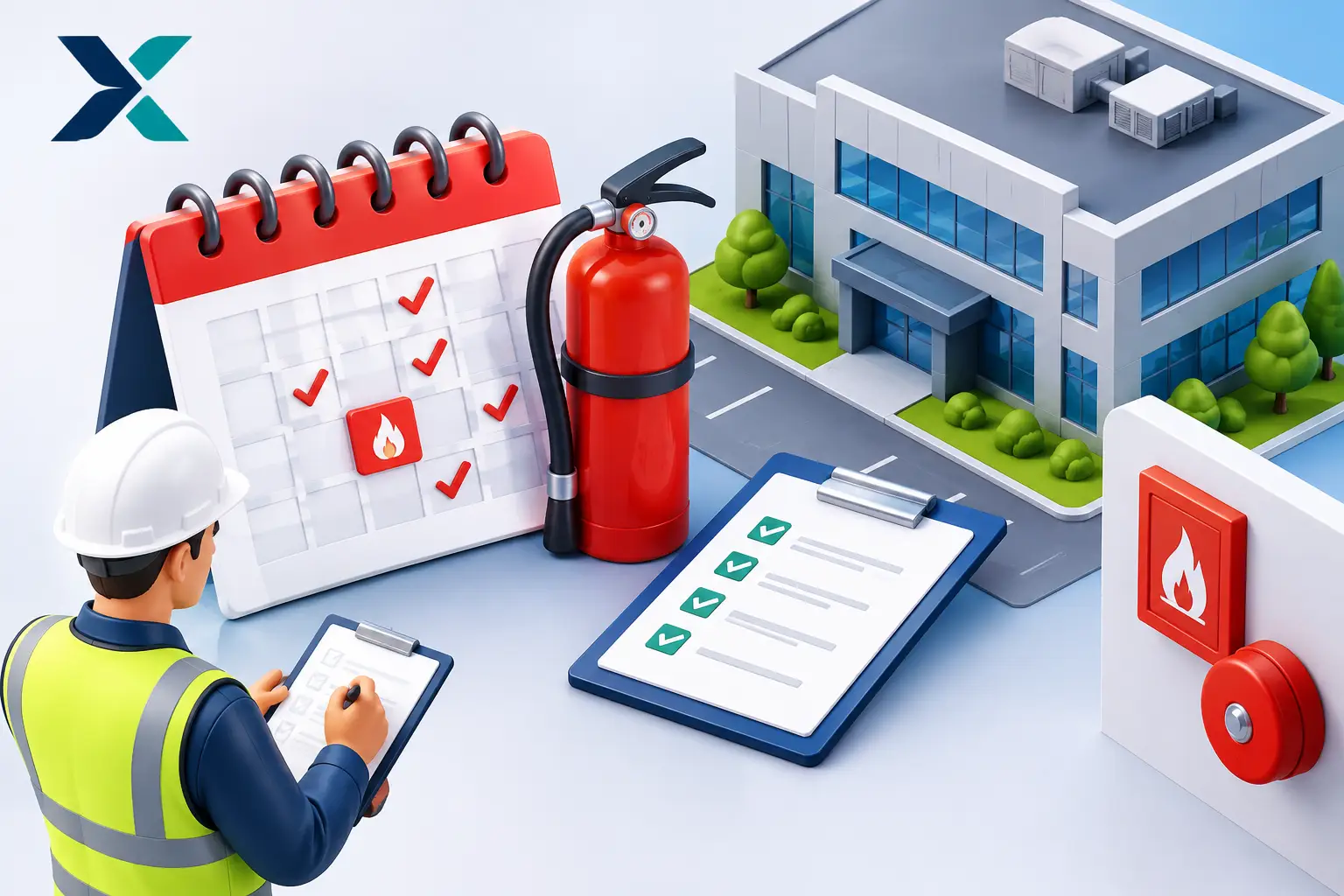
A fire risk assessment is not a certificate to file away and forget. Fire risk assessment frequency should reflect what is happening in your premises, the people who use it and the controls relied upon to keep them safe. For many businesses, an annual review is a sensible discipline. It is not, however, a substitute for reviewing the assessment whenever a meaningful change could affect fire safety.
For duty holders, the question is not simply, “When is this due?” It is whether the assessment still accurately describes the building, its fire risks and the measures in place to control them. If it does not, your records may look complete while your protection arrangements are already out of date.
A fire risk assessment is a living document
In Scotland, fire safety duties require responsible people to take reasonable steps to protect occupants from fire and to keep fire safety measures under review. A suitable and sufficient fire risk assessment is central to this duty. It should identify potential ignition sources, combustible materials, people at risk, escape arrangements, detection and warning systems, emergency lighting, firefighting equipment and the management procedures that support them.
There is no single legal rule stating that every premises must commission a new assessment every 12 months. The required frequency depends on the level of risk and change. A quiet, stable office with a consistent layout and low fire load may need less frequent full reassessment than a workshop using flammable products, a busy retail premises, or a short-term let with changing occupants.
That said, an annual formal review gives most commercial duty holders a practical and defensible baseline. It creates a regular opportunity to check that action points have been completed, staff arrangements remain effective and fire precautions have not slipped through everyday operational changes.
Fire risk assessment frequency: when should you review?
A review is needed whenever the existing assessment may no longer be valid. In a well-managed premises, this means setting a planned review date and responding promptly to change rather than waiting for the diary reminder.
Use an annual review as a practical baseline
For offices, shops, service businesses and many rental properties, an annual review is usually a proportionate approach. It helps ensure that staff turnover, minor alterations and maintenance issues are captured before they become larger compliance failures.
An annual review should not be a paper exercise. The assessor should revisit the premises, verify that control measures are still in place and consider whether the original risk rating remains appropriate. A fire door held open, a blocked corridor, a moved extinguisher or a change in stock storage can materially affect the safety of the building.
Higher-risk premises may need more regular review. This can include sites with hot work, commercial kitchens, significant electrical equipment, hazardous substances, sleeping accommodation, complex escape routes or vulnerable occupants. The more quickly conditions change, the shorter the review cycle should be.
Review immediately after a significant change
Do not wait for the annual review if there has been a change that could alter fire risk or the ability to evacuate safely. Common triggers include:
- building work, refurbishment or a change to room layouts
- a new tenant, occupier, contractor activity or change of business use
- an increase in staff numbers, visitors or people who may need assistance to escape
- new machinery, cooking equipment, electrical installations or storage arrangements
- the introduction of flammable liquids, gases, chemicals or larger quantities of combustible stock
- a fire, near miss, false alarm pattern or fault in a fire safety system
Even a small change can matter if it affects an escape route or removes a layer of protection. For example, turning a store room into a work area may increase occupancy and introduce electrical equipment. Reorganising a retail floor can reduce the width of a route to an exit. These are operational decisions, but they should be considered through a fire safety lens before they become established practice.
Do not confuse the assessment with equipment servicing
A fire risk assessment determines what precautions your premises need. It is not the same as servicing the equipment that supports those precautions.
If your assessment identifies portable fire extinguishers as necessary, they must be suitable for the risks present, correctly located, clearly identified and maintained. Under BS 5306-3, portable extinguishers require regular checks and an annual basic service by a competent person. More detailed extended servicing or replacement intervals can apply depending on the extinguisher type and condition.
Between professional visits, a nominated person should carry out simple visual inspections, commonly each month. They should check that extinguishers are present, accessible, undamaged, in date, correctly pressurised where applicable and have not been discharged or tampered with.
The same principle applies to alarm systems, emergency lighting, fire doors and escape routes. An annual risk assessment cannot make up for missed routine checks, and a current extinguisher service label does not prove that the overall fire strategy remains appropriate. Both strands are needed to protect people and support compliance.
Why records matter when something goes wrong
Written records demonstrate that fire safety has been actively managed. They also make it easier for the next manager, landlord or facilities lead to understand what has been checked, what needs attention and who is responsible for completing outstanding work.
Keep the current fire risk assessment, its review dates and a clear action plan. Record when actions are completed, including supporting evidence where useful, such as service certificates, photographs of remedial works or staff training records. If an action cannot be completed immediately, document the interim control measure and set a realistic completion date.
This is particularly valuable following a fire, enforcement visit or insurance query. Insurers will expect businesses to take reasonable precautions and to maintain essential fire protection. Gaps in servicing, unresolved assessment actions or weak documentation can complicate a claim and expose the business to avoidable disruption.
Rental accommodation and short-term lets need active oversight
Landlords and short-term let operators should not assume that a domestic setting carries no fire safety responsibilities. The applicable duties and expectations vary according to the type of accommodation, occupancy and licensing arrangements, but the practical risks remain clear: unfamiliar guests may not know the escape route, appliances receive heavy use and furniture or layout can change between bookings.
A review should be carried out before opening a newly converted or refurbished property, after any fire-related incident, and whenever the layout, heating, cooking facilities or occupancy arrangements change. Regular checks between bookings can identify damaged alarms, obstructed exits or missing fire safety information before the next guests arrive.
For commercial landlords, responsibilities may be shared with tenants, but they should be clearly defined. Common areas, building-wide systems and structural fire precautions should not be left in a grey area. A written division of responsibilities reduces the risk that everyone assumes somebody else is checking the issue.
Make the review frequency proportionate to your premises
The right interval is based on risk, not convenience. A low-risk, stable premises may be well served by an annual review supported by routine checks. A premises with frequent alterations, higher fire loads or sleeping occupants may require a more frequent and detailed approach.
Competence also matters. An assessor should understand how the building is used, recognise shortcomings in practical fire precautions and explain what action is required in plain English. Generic documents with no meaningful connection to the premises offer little protection when real decisions need to be made.
For businesses in Glasgow and the central belt, EXSERVICE can provide practical fire risk assessments alongside extinguisher servicing and maintenance, helping duty holders keep records current and equipment ready to use.
The safest approach is to put a review date in the diary, then treat every significant operational change as a reason to ask one direct question: would our current fire risk assessment still protect the people in this building today?
Leave a Reply