

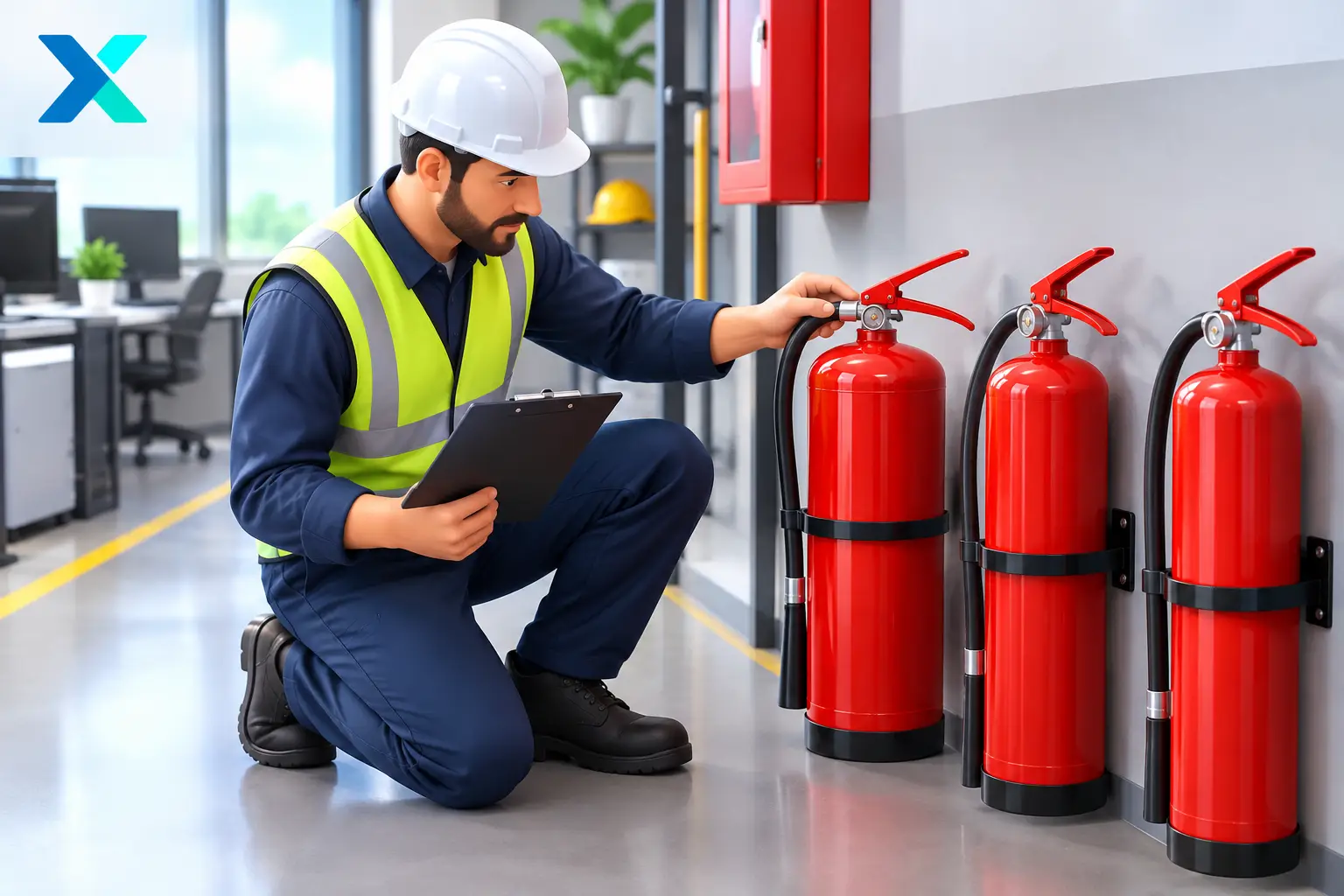
A new fire extinguisher on a wall is not automatically ready to protect your staff, customers or premises. Commissioning fire extinguishers in workplaces is the process that confirms each unit is suitable for the risks present, correctly positioned, clearly identified and ready for immediate use. It is the point at which equipment becomes part of a managed fire safety system rather than simply a purchase.
For duty holders, this matters because the first few moments of a small fire can determine whether it is contained or becomes a major disruption. An extinguisher that is missing, inaccessible, the wrong type for the hazard or not properly recorded can create a serious weakness in your fire precautions. It can also raise difficult questions after an incident from insurers, enforcing authorities and employees.
What commissioning means for workplace fire extinguishers
Commissioning is the initial inspection and set-up of portable fire extinguishers after they have been supplied and installed. A competent person checks that the equipment is appropriate for the premises and risks, then documents that it has entered service. It should be carried out in line with the relevant requirements of BS 5306, the British Standard series covering portable fire extinguishing equipment.
This is different from routine visual checks by staff and different again from annual servicing. Commissioning establishes the baseline. Annual maintenance then confirms that the equipment remains in serviceable condition, while more frequent site checks help identify obvious issues such as damage, obstruction or a discharged unit.
A proper commissioning visit will normally confirm the extinguisher type, capacity, serial number, condition, operating pressure where relevant, location and service status. The engineer should also fit or update the appropriate maintenance label and enter the equipment in the service record.
Why simply buying extinguishers is not enough
Fire extinguishers need to match the foreseeable fire risks in the building. Water-based extinguishers may be suitable for ordinary combustible materials such as paper, wood and textiles. Foam, carbon dioxide, wet chemical and other specialist units each have different uses and limitations. Electrical equipment, commercial kitchens, flammable liquids, workshops and storage areas can all require a more considered approach.
Using the wrong extinguisher can make a fire worse or place the user in danger. For example, water should not be used on live electrical equipment or burning cooking oil. This is why extinguisher provision should follow the findings of a suitable fire risk assessment, rather than a one-size-fits-all approach.
Location is equally important. An extinguisher may be technically suitable but ineffective if it is hidden behind stock, placed inside a locked room, mounted too high, or positioned beyond the likely route of escape. In a stressful situation, people need to see what is available and reach it without moving towards the fire.
Commissioning provides the opportunity to correct these practical problems before they become an emergency failure.
What a competent commissioning inspection should check
The detail will depend on the premises, but effective commissioning should address more than whether a red cylinder is present. The process should establish that each extinguisher is appropriate, accessible and traceable throughout its service life.
A competent engineer will typically check:
- the extinguisher type and fire rating against the hazards identified in the fire risk assessment;
- the quantity and positioning of units, including travel distances and escape routes;
- the physical condition of the extinguisher, hose, horn, safety pin, tamper seal and bracket or stand;
- pressure indicators and weight where applicable, along with clear operating instructions and identification signage; and
- maintenance labels, asset records and the service documentation needed to manage future inspections.
The commissioning process may also identify equipment that has been incorrectly supplied, damaged during delivery, left in an unsuitable environment or installed without consideration for changes in the building. A retail unit with a small stockroom has different needs from an office, workshop, short-term let or busy kitchen. The principle is the same: the equipment must suit the actual premises, not an assumption about it.
Commissioning fire extinguishers in workplaces under Scottish duties
In Scotland, employers, landlords and other responsible persons have duties to take reasonable fire safety measures under Scottish fire safety legislation. The exact duty holder can vary according to how the premises are occupied and controlled, but the requirement to assess risk and maintain suitable precautions is clear.
A fire risk assessment should identify the people at risk, sources of ignition, combustible materials, escape arrangements and firefighting equipment required. Portable extinguishers are generally provided to tackle small fires where it is safe to do so, support escape and protect the premises. They are not a substitute for calling the fire and rescue service, nor should anyone be expected to fight a fire if it places them at risk.
Commissioned equipment helps demonstrate that the arrangements identified by the fire risk assessment have been put into practice. It also gives managers a reliable record of what is on site, where it is located and when it needs attention. That record is valuable during inspections, insurance reviews, tenancy changes and post-incident investigations.
For landlords and operators of short-term lets, this is particularly relevant. Turnover, furnishings, guest behaviour and changing layouts can alter fire risk quickly. The same applies to commercial premises that add machinery, revise storage arrangements or convert rooms to new uses.
The link between commissioning, training and emergency planning
An extinguisher is only useful when the person using it understands its limits. Staff should know the location of firefighting equipment, the alarm and evacuation arrangements, and when they should leave rather than attempt to tackle a fire. Fire extinguisher training should be proportionate to the premises and the roles people are expected to perform.
Commissioning supports this by ensuring the units shown during induction or training are actually the units people will find in an emergency. Clear signage and sensible placement reduce hesitation. Where extinguishers are moved after commissioning, records and signage should be updated rather than allowing the fire plan to become inaccurate.
There is a trade-off to manage. Providing more extinguishers than necessary can create cost and maintenance obligations without improving safety. Providing too few, or placing them poorly, may leave staff unable to respond to a small fire safely. A risk-based assessment by a competent provider helps strike the right balance.
What happens after the extinguishers are commissioned?
Commissioning is the beginning of the maintenance cycle, not the end of it. Portable extinguishers need regular attention to remain ready for use. Responsible persons should arrange routine visual checks, usually carried out by an appointed member of staff, to spot missing units, obstructions, broken seals, damage or signs of discharge.
Professional maintenance is also required at appropriate intervals under BS 5306. This commonly includes annual basic servicing, with extended servicing or replacement requirements depending on the extinguisher type and age. Some units are designed for replacement at the end of their service life rather than extensive overhaul. The maintenance label and service record should make the next required action clear.
A business should also review its extinguisher provision after any significant change. Examples include a refurbishment, new electrical equipment, installation of a commercial kitchen, changes to stock, increased occupancy, a new tenant or a fire incident. Moving premises is another obvious trigger. Taking extinguishers down from a previous site and placing them in a new building without assessment can leave gaps in cover or create compliance issues.
Choosing a provider for commissioning and maintenance
The right provider should be able to supply suitable equipment, assess locations, commission units, maintain records and return for ongoing servicing. This avoids the common problem of buying extinguishers from one source, having them fitted by another and then discovering nobody has taken responsibility for the service history.
Ask whether the provider works to the relevant BS 5306 requirements, records individual assets clearly and explains any recommendations in plain English. The advice should be practical and proportionate. A competent contractor will explain why a particular extinguisher is needed, where it should go and what ongoing checks are required, rather than relying on generic packages.
For businesses in Glasgow and across the central belt, EXSERVICE provides this focused support across offices, retail premises, workshops, service businesses, rental accommodation and short-term lets. The objective is straightforward: equipment that is correctly supplied, sited, commissioned and maintained so it is ready when it matters.
A fire extinguisher should never be treated as decoration for a compliance folder. Commission it properly, keep it maintained and make sure the people responsible for the building know that every unit has a purpose, a location and a service history.
Leave a Reply