

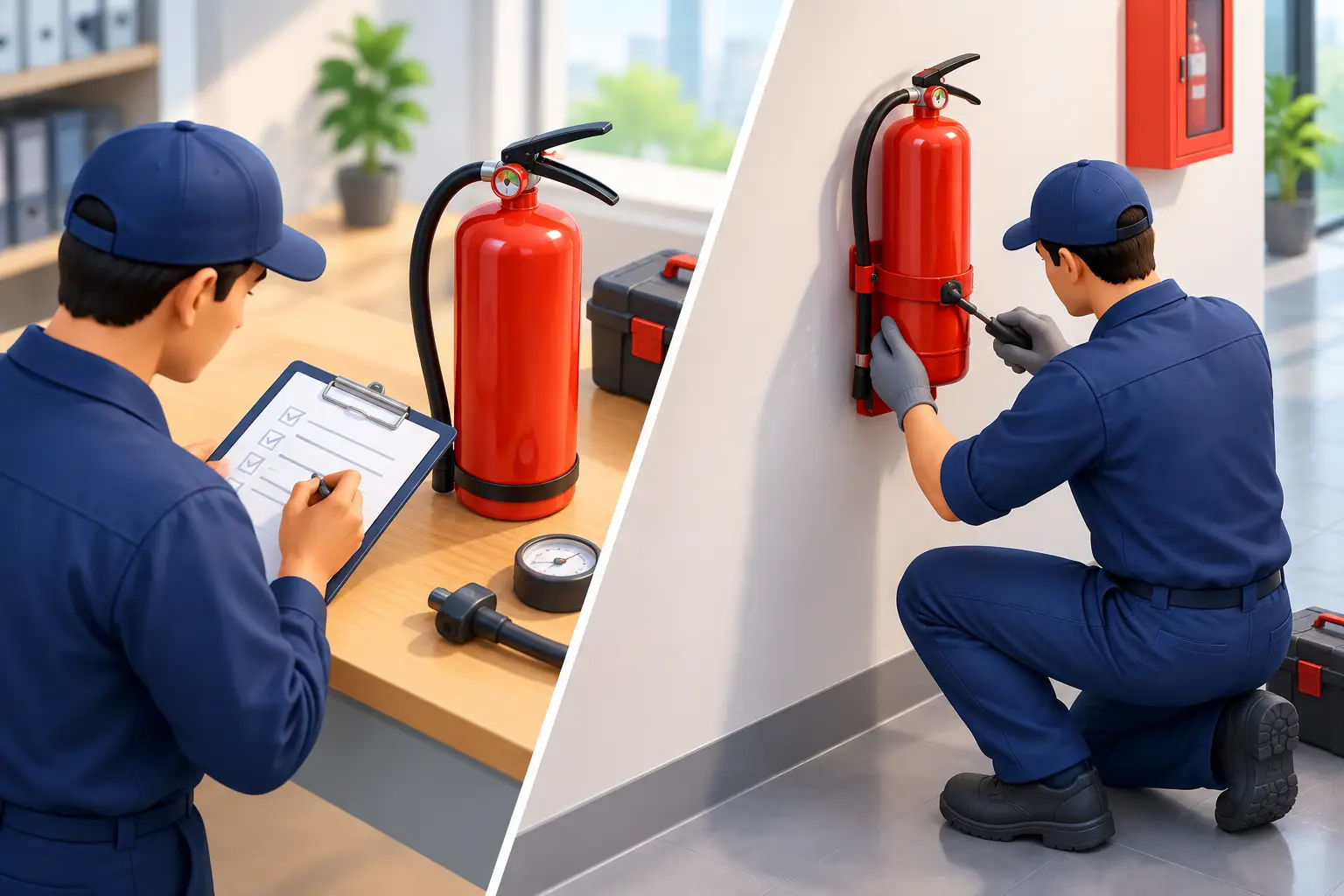
A new extinguisher can be fixed neatly to a wall and still be unready for an emergency. That is the central issue in commissioning vs installation fire extinguishers: installation puts equipment in place, while commissioning verifies that it is suitable, operational and correctly prepared for the risks at that particular premises. For a business owner or responsible person, treating the two as the same job can leave a serious gap in fire safety arrangements.
An extinguisher is not simply a purchase. It is part of the building’s fire precautions, intended to support a safe escape and deal with a small fire only where it is safe to do so. The right unit must be in the right location, identified clearly, accessible and maintained. It must also be selected for the hazards employees, visitors and contractors may face.
Commissioning vs installation of fire extinguishers
Installation is the physical process of placing extinguishers at the premises. This may include fitting wall brackets or stands, positioning units at agreed locations, applying identification signs and making sure equipment is visible and not obstructed. Good installation matters because an extinguisher that cannot be found or reached quickly is unlikely to help during the early moments of a fire.
Commissioning is a separate, more technical process. A competent person examines the extinguisher on site before it is put into service. They confirm that the unit is appropriate for its intended use, in sound condition, correctly located and ready for use. The work should be recorded so the responsible person has evidence that the equipment entered service properly.
In practical terms, installation answers, “Has the extinguisher been put where it is meant to be?” Commissioning asks, “Is this the correct extinguisher, in a suitable condition, for this risk, and can it now be relied upon?” Both answers must be yes.
Installation is about access, location and visibility
Extinguishers should be positioned where people can reach them without moving towards a fire. They are commonly located on escape routes, near exits or beside areas with identified risks. However, placing one beside every doorway is not automatically good practice. The correct provision depends on the fire risk assessment, the layout of the premises, travel distances, the type of work carried out and the people using the building.
For example, a small office with ordinary combustible materials may need different provision from a commercial kitchen, workshop, warehouse or plant room. A unit mounted too high, hidden behind stored stock or placed within a locked room does not provide effective protection, even if it is technically present on site.
Installation also involves practical choices. Wall mounting can improve visibility and prevent damage, while floor stands may be more suitable where wall construction or heritage finishes make drilling inappropriate. Signs must be clear enough to help people identify the equipment quickly. These details are not cosmetic. They affect response time when conditions are stressful and visibility may be poor.
Commissioning confirms suitability and readiness
Commissioning should take place at the premises because the site conditions matter. A boxed extinguisher may be new, but that alone does not prove it is suitable for the location where it has been delivered.
The commissioning engineer checks the extinguisher type, rating, condition and positioning against the building’s risks. They can identify issues such as an unsuitable medium for electrical equipment, inadequate provision for flammable liquids, or a unit located where it will be damaged, blocked or exposed to unsuitable temperatures.
The process also establishes the baseline for future maintenance. Equipment is labelled and documented, providing a clear service history for the responsible person, insurers and enforcing authorities where required. This record is particularly valuable when staff change, a property is sold or managed by another party, or an incident prompts questions about fire safety controls.
Why the distinction matters to duty holders
Fire safety law requires responsible persons and duty holders to take general fire precautions appropriate to their premises. In Scotland, the Fire (Scotland) Act 2005 and associated regulations place duties on those responsible for non-domestic premises to assess fire risk and maintain relevant fire safety measures. The legislation does not prescribe a one-size-fits-all extinguisher layout, which is why competent assessment and proper records matter.
BS 5306 provides recognised guidance for the selection, commissioning, installation and maintenance of portable fire extinguishers. Following the relevant standard helps demonstrate that decisions have been made systematically rather than by guesswork. It can also support conversations with insurers, landlords, clients and auditors.
The commercial consequences of getting it wrong can be significant. A fire may cause injury, premises damage, stock loss, downtime and lost customer confidence. If extinguishers were unsuitable, inaccessible or poorly maintained, a business could face difficult questions about whether reasonable precautions were in place. Insurance cover depends on the policy terms, but failure to meet fire safety responsibilities or maintenance conditions can create avoidable complications during a claim.
What competent commissioning should establish
A commissioning visit should do more than attach a label to a cylinder. The engineer should consider the premises and make sure the extinguishers are fit for their intended role. This normally includes checking that:
- the extinguisher type and fire rating are appropriate to the identified hazards;
- the unit is undamaged, charged where applicable, sealed and supplied with the required operating components;
- equipment is located, mounted and signed so that it can be identified and accessed promptly;
- commissioning labels, service documentation and the site equipment record are completed accurately.
The precise checks can vary according to the extinguisher type, manufacturer’s instructions and the nature of the site. A CO2 extinguisher protecting electrical risks, for instance, has different handling and siting considerations from a wet chemical extinguisher in a kitchen. This is why a generic online purchase followed by self-installation is not always a sensible compliance route.
When installation alone may appear sufficient
There are situations where a manager may believe installation is all that is needed. Perhaps an existing unit has been moved during office refurbishment, replacement stock has arrived from a supplier, or a landlord has left extinguishers behind after a tenancy change. In each case, the equipment may look serviceable, but appearance is not evidence of suitability or serviceability.
Moving an extinguisher can alter travel distances or leave a risk area without appropriate cover. A replacement may have a different fire rating from the unit it replaces. Equipment inherited with a property may have no reliable maintenance history. Commissioning or a competent review provides the assurance that these changes have not weakened the fire safety arrangements.
There is also a clear difference between fitting a bracket and making a professional decision about extinguisher provision. Building alterations, new machinery, changes in stock, introduction of lithium-ion battery charging or a change from office use to food preparation can all alter the risk profile. The fire risk assessment should lead the decision, not the supplier’s available stock.
Commissioning is the start of ongoing maintenance
Commissioning is not a substitute for future servicing. Once extinguishers are in service, they require routine checks and maintenance in line with the applicable standard, manufacturer guidance and the needs of the premises. The responsible person should arrange regular visual inspections, ensuring units remain in place, unobstructed, undamaged and within their service date.
Professional maintenance then provides the scheduled examination needed to keep equipment dependable. Annual servicing is a familiar requirement for many workplaces, but some extinguisher types also require extended service or overhaul at defined intervals. Equipment that has been discharged, damaged, corroded, tampered with or exposed to unsuitable conditions should be dealt with promptly rather than left until the next scheduled visit.
Records should be retained in an accessible fire safety file or equivalent system. A clear record of commissioning, inspections, servicing, replacements and defects helps managers control their responsibilities and demonstrates that fire precautions are being actively managed.
Choosing a practical approach for your premises
The safest approach is to treat supply, siting, installation, commissioning and maintenance as connected parts of one fire safety responsibility. This reduces the risk of assumptions passing between a supplier, contractor, landlord and occupier. It also makes it easier to identify who is responsible for addressing defects and maintaining the service record.
For businesses in Glasgow and the surrounding area, a competent fire safety provider can assess the premises, supply suitable equipment and ensure it is commissioned and documented correctly. EXSERVICE supports this process with compliance-led extinguisher services designed to keep workplace equipment ready for immediate use.
Before accepting any new or relocated extinguisher as part of your fire precautions, ask whether it has merely been installed or whether it has been properly commissioned for the risks on site. That single question can protect people, support compliance and prevent a small oversight becoming a costly failure.
Leave a Reply