

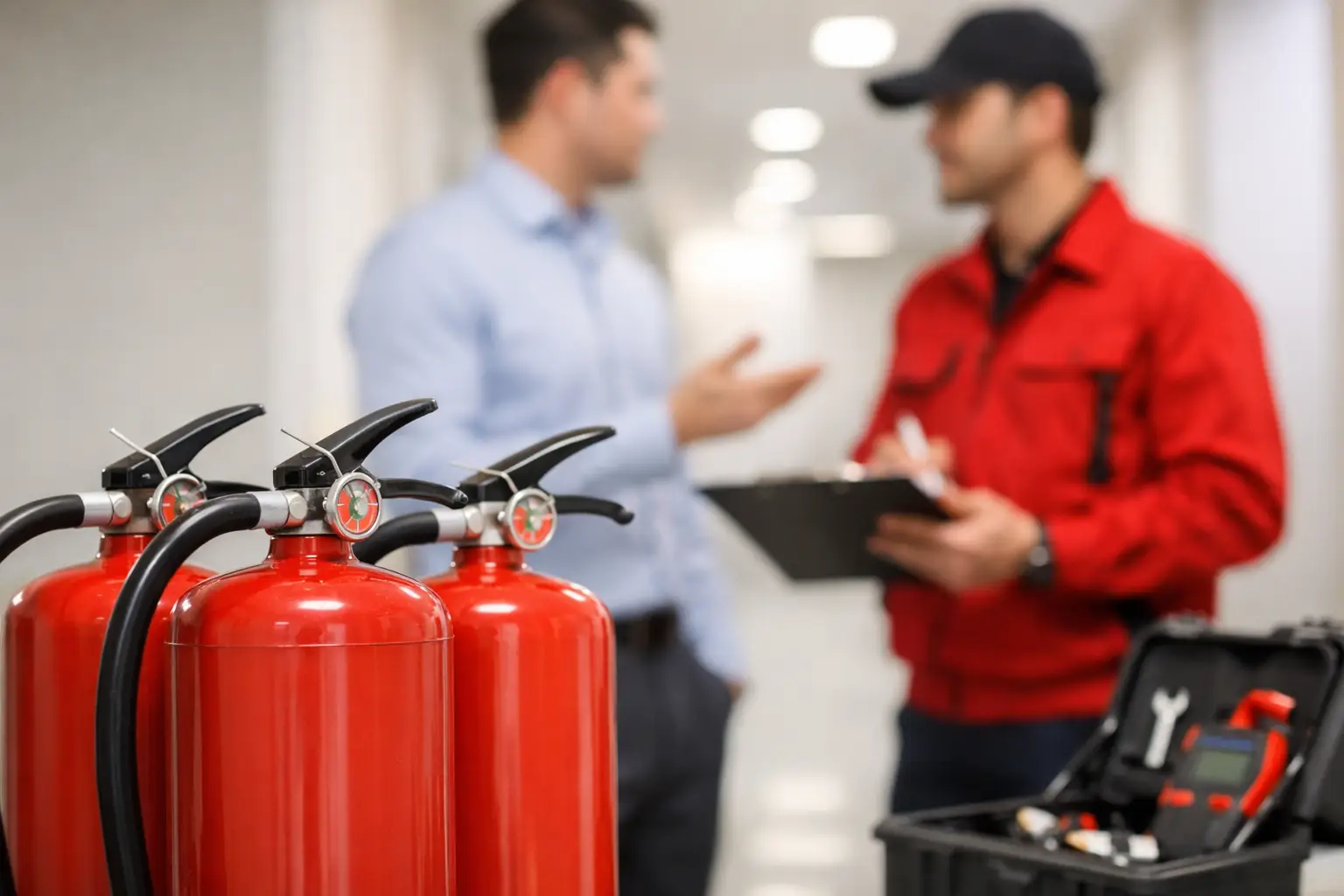
A fire extinguisher on the wall can give a false sense of security. If it is overdue for servicing, wrongly sited or no longer suitable for the risks in the building, it may do very little when staff need it most. That is why choosing competent fire extinguisher service providers matters. You are not simply arranging a routine visit. You are putting a key part of your workplace fire protection into someone else’s hands.
For business owners, landlords and duty holders, the right provider does more than inspect cylinders and apply service labels. They help you stay compliant, support insurer expectations and reduce the risk of avoidable failure during an emergency. The difference between a basic contractor and a specialist often becomes clear only when there is an audit, an incident or a question about whether your equipment was properly maintained.
What fire extinguisher service providers should actually do
A proper extinguisher service is not a box-ticking exercise. A competent provider should assess whether the extinguishers on site are appropriate for the hazards present, confirm they are accessible and correctly positioned, and carry out servicing in line with the relevant British Standard requirements. They should also identify units that are damaged, discharged, obsolete or at the end of their service life.
That work has practical consequences. In a commercial kitchen, the issue may be whether the wrong extinguisher type has been installed near cooking equipment. In an office, it may be whether staff can quickly reach an extinguisher without passing through smoke or fire. In a mixed-use property or rental accommodation, it may be whether common areas and business spaces have been assessed with enough care.
A reliable provider should leave you with clear records, clear recommendations and no uncertainty about what has been checked. If anything needs replacing or relocating, you should be told why, not simply handed a quote.
Why competence matters more than price
It is easy to compare providers on call-out fees or annual service costs. The problem is that the cheapest option is not always the safest or the most economical over time. If inspections are rushed, documentation is incomplete or unsuitable extinguishers remain in place, the real cost appears later in the form of disruption, failed compliance checks or uninsured losses.
This is where many businesses get caught out. They assume all providers deliver the same level of technical judgement. In practice, standards vary. Some firms focus on speed and volume. Others take time to consider siting, risk profile, servicing history and whether the existing equipment still matches the premises.
There is also a business continuity issue. If a small fire starts and first-aid firefighting equipment does not work as expected, a manageable incident can escalate into a serious interruption. The value of good servicing is not just in meeting a legal duty. It is in preserving the ability to respond quickly and limit damage.
How to assess fire extinguisher service providers
When comparing fire extinguisher service providers, start with competence, not sales claims. Ask whether they service and maintain extinguishers in line with BS 5306 and whether they can explain what that means for your premises. A capable provider should be comfortable discussing inspection frequencies, replacement requirements and the difference between routine maintenance and a broader fire safety review.
You should also look for a provider that understands your type of property. A workshop, office, retail unit and HMO do not carry identical risks. The equipment needed, the siting requirements and the level of user exposure can all differ. If a provider applies the same approach to every site, that is a warning sign.
Documentation is another strong indicator. Servicing should produce usable records that help you demonstrate compliance and manage future inspections. If records are vague or inconsistent, that creates avoidable risk for the responsible person.
Communication matters as well. Good providers explain what they have found in plain English. They do not hide behind jargon or recommend replacements without reason. Equally, they should not downplay defects simply to avoid an awkward conversation.
The link between extinguisher servicing and legal compliance
Most duty holders are aware that fire safety responsibilities exist, but many are less clear on how extinguisher servicing fits into them. In practice, extinguishers form part of a wider compliance picture that includes fire risk assessment, equipment maintenance and ensuring measures remain suitable for the building and its use.
If your premises require fire extinguishers, they need to be maintained so they are ready for use. That expectation is not optional just because the equipment appears untouched. An extinguisher can look fine externally while still being compromised by pressure loss, damage, tampering or age-related issues.
Servicing also supports the accuracy of your fire risk controls. A fire risk assessment may identify the need for specific extinguisher types in specific locations, but that decision only remains effective if the equipment is still present, in serviceable condition and appropriate to the hazard. Maintenance closes that gap between assessment and real-world readiness.
What a dependable provider will flag before it becomes a problem
Experienced providers do more than react to faults already visible on the day. They notice patterns. Repeated accidental discharge, extinguishers blocked by stock, signs of misuse, outdated unit types and locations that no longer reflect the way the building is used are all issues worth raising early.
This is especially important in workplaces that change over time. An office may add a server room. A warehouse may reorganise storage. A landlord may convert part of a property to a different use. Fire protection arrangements that were suitable two years ago may no longer be enough.
A specialist provider should also be prepared to say when a wider review is needed. If extinguisher issues suggest broader weaknesses in fire precautions, the right response is not to treat servicing in isolation. It is to address the underlying risk properly.
Red flags when choosing a provider
Some warning signs are straightforward. If a company cannot clearly explain its servicing process, does not provide proper records or seems more interested in selling replacements than inspecting existing equipment, proceed carefully.
Other red flags are more subtle. Be wary of providers who never question extinguisher locations, never identify unsuitable coverage and never advise on end-of-life units. That may sound convenient, but it often means they are doing the minimum. A competent engineer should occasionally find something that needs attention.
Another concern is inconsistency. If you receive different advice at each visit, or the paperwork does not match what was done on site, confidence quickly erodes. Fire safety maintenance depends on reliability. You need to know that standards will be applied consistently year after year.
Why integrated fire safety support often works better
For many businesses, extinguisher maintenance is only one part of the responsibility they carry. They may also need annual fire risk assessments, advice on coverage, replacement of expired units and reassurance that records are in order. Using separate contractors for each task can work, but it can also create gaps.
Where one specialist can supply, site, commission and maintain extinguishers while also understanding the wider compliance picture, decision-making becomes clearer. Recommendations are more likely to reflect the actual risks of the building rather than a narrow servicing brief. For businesses in Glasgow and the surrounding area, that can mean a more practical and accountable relationship with one provider who understands local commercial premises and recurring compliance demands.
This does not mean every business needs a single contractor for everything. Larger organisations may prefer a more segmented approach. But for many SMEs and landlords, integrated support reduces confusion and makes it easier to keep standards consistent.
Choosing a provider that protects your business
The best fire extinguisher service providers combine technical competence with a clear sense of responsibility. They understand that the work affects life safety, legal compliance and the ability of a business to recover from a fire incident. They do not treat annual servicing as routine admin. They treat it as part of keeping people, premises and operations protected.
That is the standard businesses should expect. If your current arrangements leave you unsure about compliance, unsure about records or unsure whether equipment would work when needed, the issue is not only the extinguishers themselves. It may be the quality of the support behind them.
A dependable provider gives you confidence for the right reasons – because the equipment has been properly checked, the risks have been properly considered and the next inspection is already part of a planned, accountable approach to fire safety.
Leave a Reply